The First Six Years: Conquests of Independence
As caregivers and parents, we have a bit of a bittersweet role. While we want to keep our children close, we ultimately need to support their path toward independence.
We expect dependence at the beginning. Yet our newborns take their very first step toward independence at birth. Once born, they have to breathe on their own. And rather than get nutrition through the umbilical cord, they use effort to begin latching on or suckling.
Throughout their first six years of life, our children achieve so many milestones of independence. Let’s take a look at some of these conquests of independence. You can use this framework as a guide and reminder of how we can support our children as they grow and develop.
Birth to One Year
- The first conquest of independence is birth which comes with the cutting of the umbilical cord. At this point, infants must breathe and gain nutrition on their own. Even our expression “It’s time to cut the cord” indicates the shift to increased independence.
- Movement is another acquisition of independence in the first year as children begin to use their arms and legs, sit up and crawl, and move from one place to another. With this increased locomotion children no longer need to be held or carried.
- Our children also begin to feed themselves. Even in the beginning when babies are nursing, we want them to indicate hunger. The weaning process and shift to using the weaning table supports this path to independence. As our children begin to eat and drink on their own, it is important to have foods and tools they can use independently (e.g. a shot glass for water, finger foods, etc.) rather than having an adult putting a utensil or bottle in their mouth.
- Children can also start to practice basic use of utensils. Having utensils that are child-sized and functional is key to independent use.
- In addition, our children need the opportunity to develop the ability to be by themselves. To become independent, they need to practice separating from their caregiver(s). Healthy separation depends upon healthy attachment, and our children need the chance to have some time without adult engagement.
- Around the end of the first year, children begin to develop language to communicate their needs. Prior to this time, they are able to use other methods to communicate: crying, cooing, smiling, etc. This communication is the beginning of social skills and children’s ability to relate socially to others.
One to Three Years
- During this time children can walk confidently and begin to run and climb. Once children can walk, they can begin the process of becoming independent in toileting.
- They become more independent with the use of their hands, which become tools for exploration. Because of this, children no longer need to rely on others to hold and carry items.
- Language use allows children to begin to express themselves independently.
- Children can start to become independent in dressing themselves.
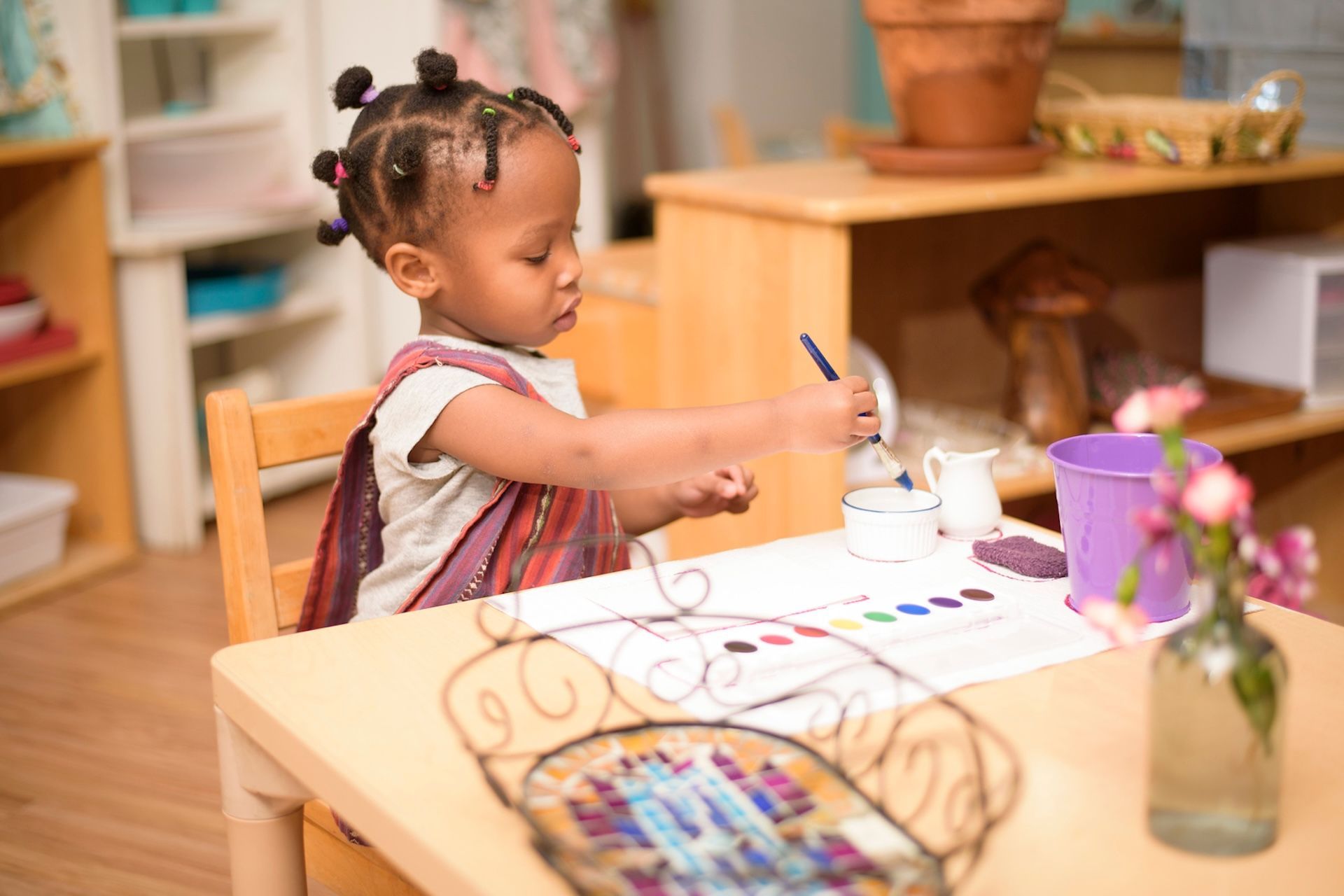
- They begin to be able to use simple tools (crayons, sticks, cups, utensils, etc.).
- They become more capable of caring for their own personal hygiene (brushing their teeth, washing their face, brushing their hair, etc.).
- Children become more proficient with and capable of carrying their own items.
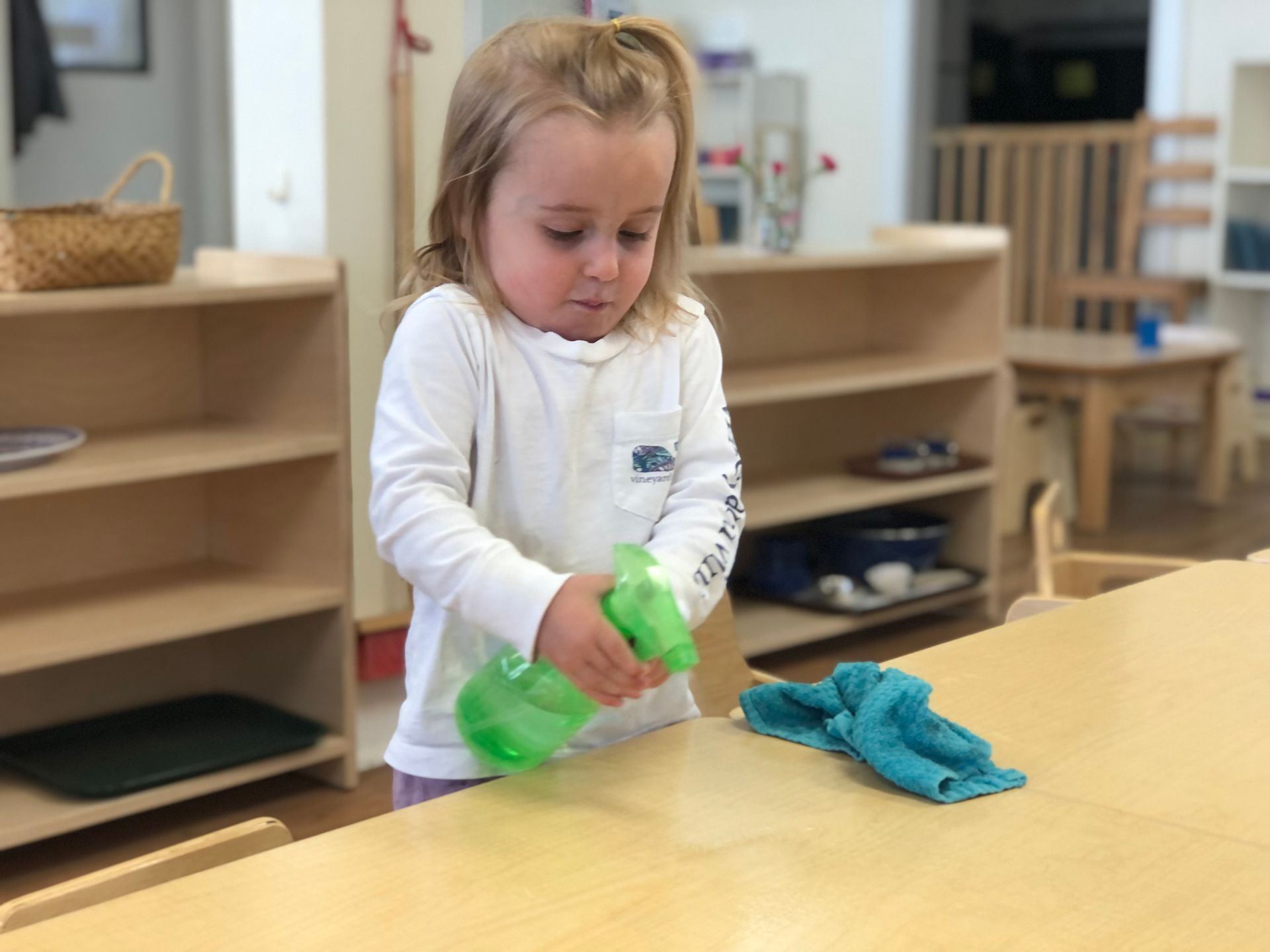
- They have the capacity to clean up after themselves (putting away belongings, folding clothing, wiping spills, sweeping crumbs, etc.).
As children get older, they need opportunities to develop their will. Thus, during this stage of independence, it is really important that children can make choices. Making a choice means they are acting for themselves and exercising their will.
From Three to Four and a Half
- If it hasn't happened already, children experience separation from the family (e.g. going to school). To be able to separate from one’s family is a new skill of independence. For children who haven’t been able to be by themselves, this is a harder process. During this time, children realize they can survive and trust others, which is a significant step in independence.
- Children develop a wider range of social skills.
- Children’s motor and visual skills become more developed and refined.
- They are able to engage in more games (e.g. catching and throwing a ball).
- They have finer manual dexterity (using individual fingers) as well as refined fine motor skills (when all fingers are working in unison).
- Children begin to develop the ability to use language to express their emotions. They can learn a multitude of words to be able to express feelings.
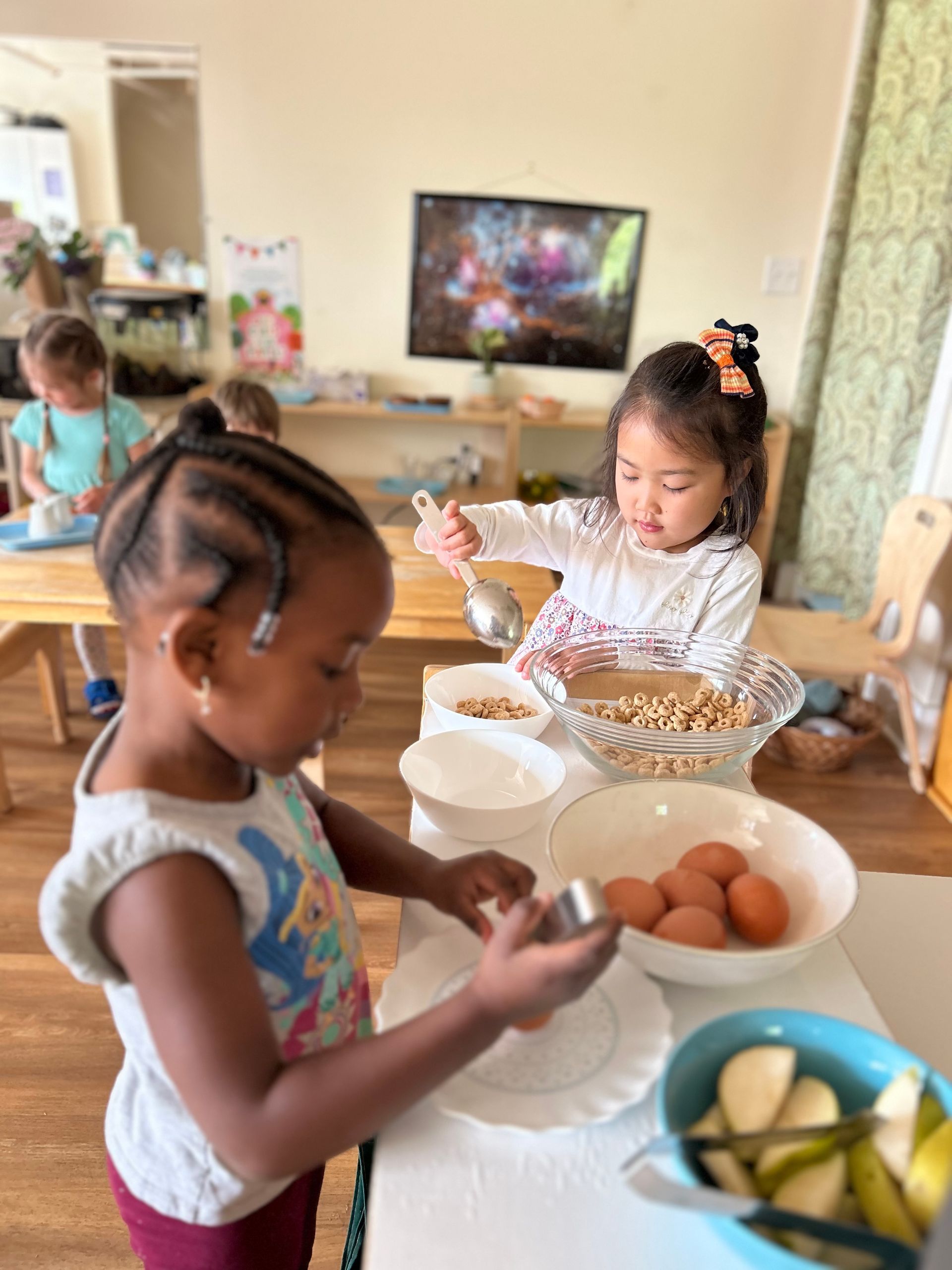
- They can use utensils and tools to prepare their own food (which ideally happens prior to age three). Research shows that children involved in preparing their own food are more likely to try diverse foods.
- Children learn to master fasteners (zippers, buckles, bows, etc.) and thus the self-care involved with dressing and undressing.
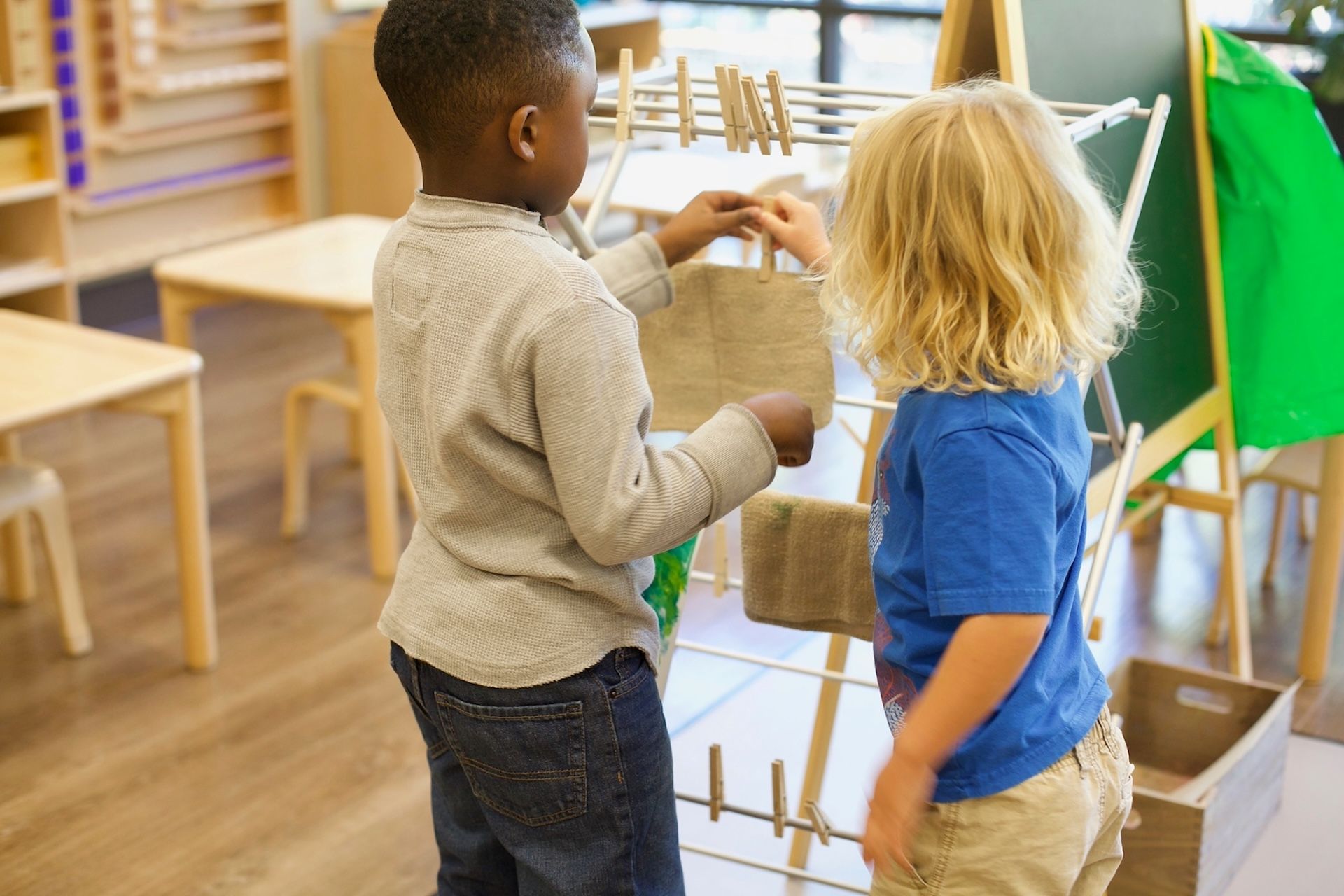
- They can contribute to their community and care not only for themselves but also for the environment through simple responsibilities like setting the table, folding towels, etc.
- They are more independent in caring for their own hygiene needs.
- Because their vocabulary is expanding, children can use words to express emotions, as well as to better express their thoughts.
Four and a Half to Six
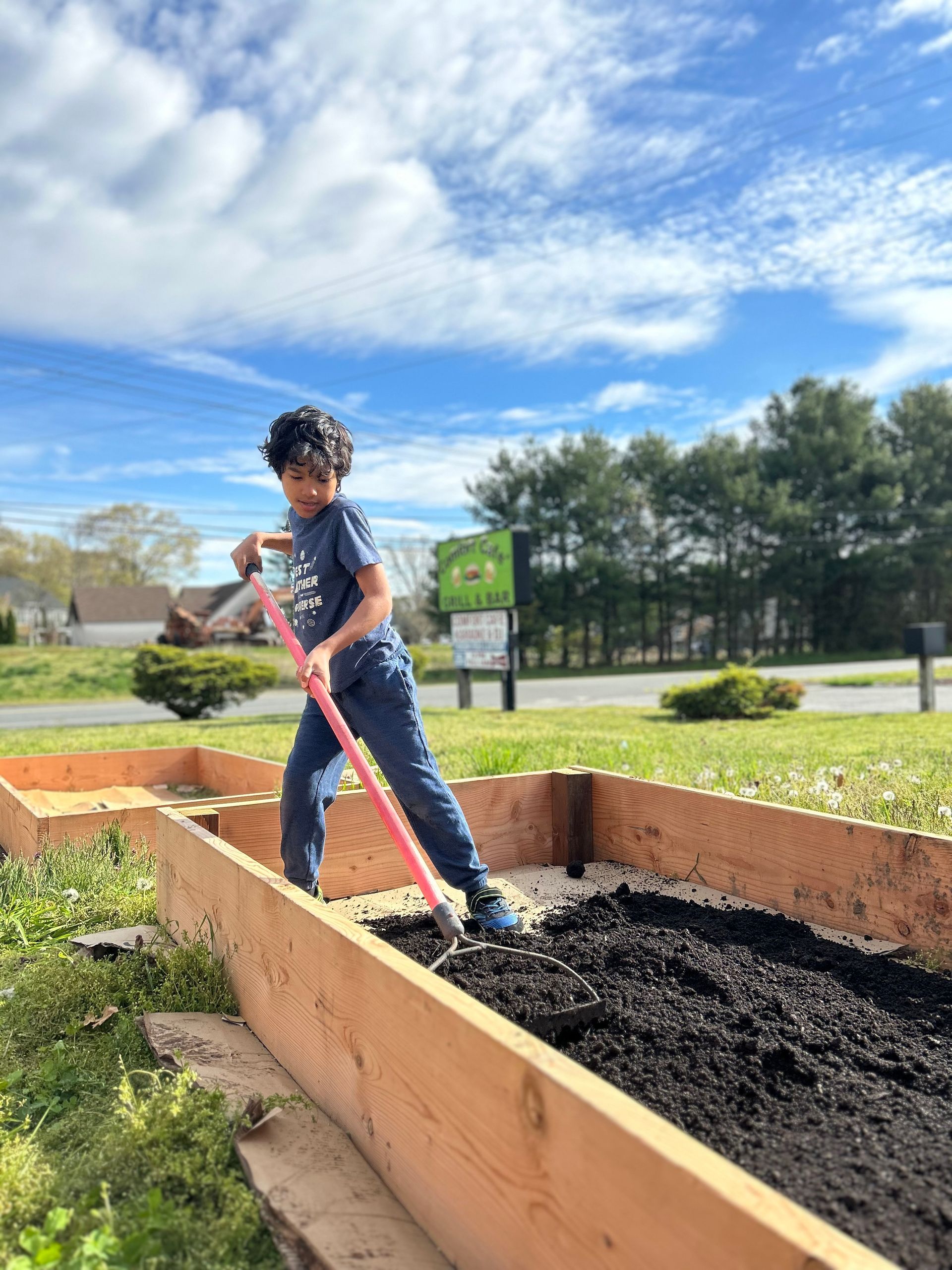
- Children have more social independence and can not only do for themselves but can also use acquired skills to help others.
- They become more independent in their social skills so they can internalize and apply the social norms of their community (e.g. pushing in chairs, greeting visitors, communicating that they need space, etc.).
- Children become proficient in dressing themselves and can help younger peers with the dressing and undressing process (e.g. getting dressed for going outdoors).
- They acquire the capacity to have empathy and compassion.
- They have a basic understanding of quantities and how they are represented, instead of just mimicking or rote counting.
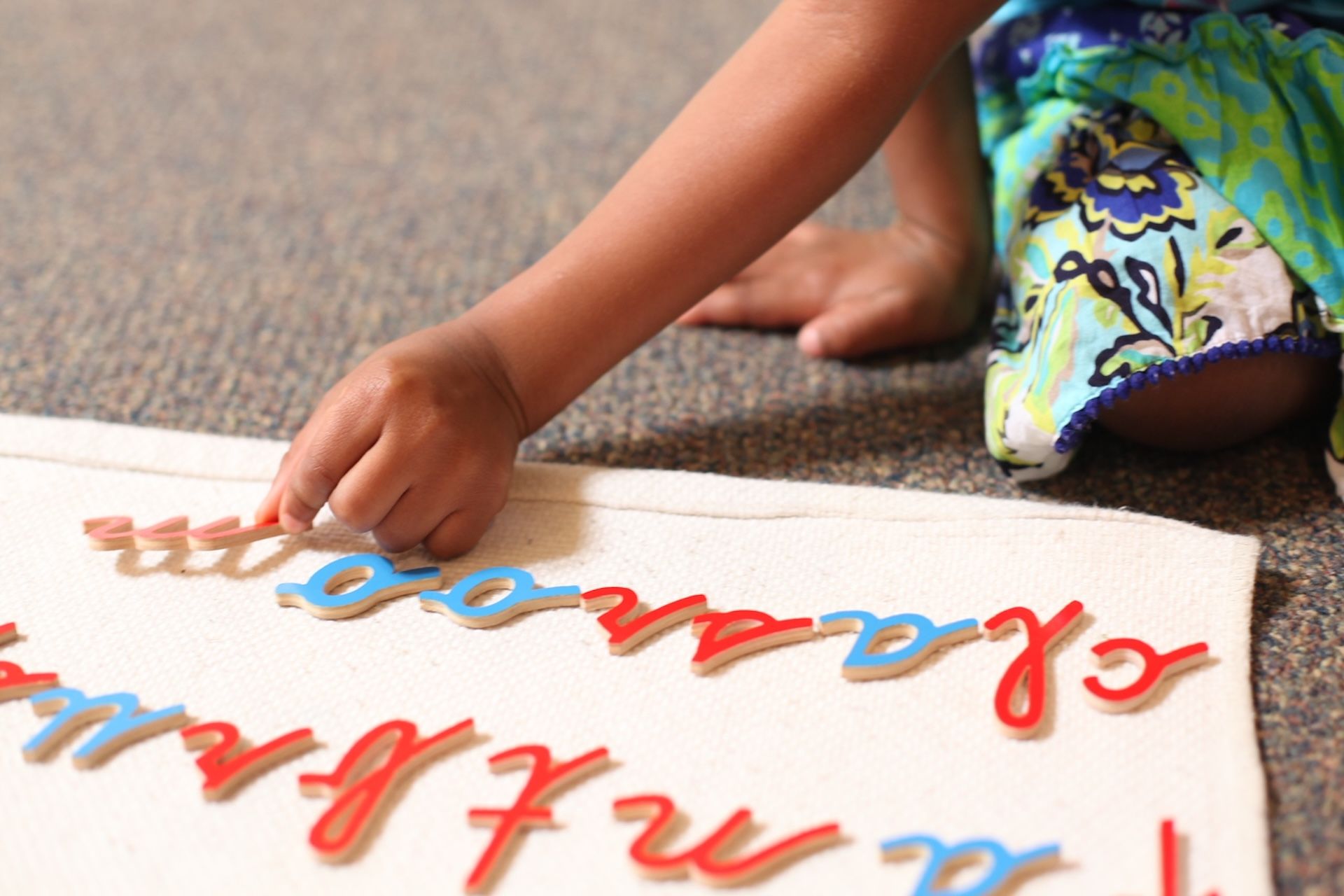
- Children begin to recognize and use the symbols of our language (e.g. expressing themselves through writing or interpreting the thoughts of others through reading).
These conquests of independence are ultimately about becoming functionally independent. Young children are in a process of mastering different aspects of their lives and they need us, their caregivers, to support them in this process.
Our children are so capable and they benefit when allowed to move toward increasing independence. If you’d like to see how our Montessori environments set children up for success, please schedule a tour! Click here.
Subscribe to our Blog
You might also like