Equity Q&A with Britt Hawthorne
Britt Hawthorne is an antiracist educator, teacher, speaker, visionary, and advocate. She is committed to raising a generation of antiracist children by centering families of the global majority and fostering equitable learning environments for students and children of all ages and backgrounds. We recently had a little Q&A with Britt and we are delighted to share this with you!
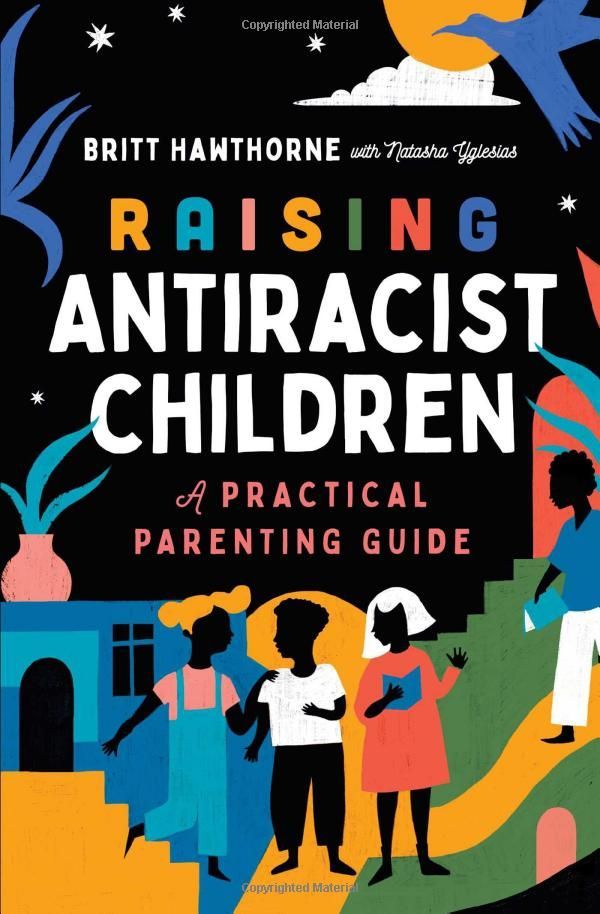
Britt is the author of the highly-anticipated, New York Times Bestseller, Raising Antiracist Children: A Practical Parenting Guide. The book is an interactive guide for strategically incorporating the tools of inclusivity into everyday life and parenting.
Your book, Raising Antiracist Children, is subtitled: A Practical Parenting Guide. Practicality seems so important for busy families. With this in mind, what do you see as important priorities? Where do you suggest families begin?
Begin by fostering brave spaces at home. Brave spaces are intentional spaces focused on coming together with a new understanding. For example, I grew up with narrow racial and cultural representation. Many books in my childhood home featured white or Black main characters. Hardly ever did the books in my home represent Latino, Native Hawaiian, Native American, South Asian, or Hispanic characters.
I know our commitments live in our actions. So, I shared my concern with my partner and we discussed how this lack of representation caused misconceptions to persist. We could then prepare a home environment that shows we value diversity. Because we’re fostering brave spaces, together we can reflect, discuss, and choose what we want for our children.
What are some priorities or practices that you uphold in your family?
I lay out five parenting principles in Raising Antiracist Children: A Practical Parenting Guide. One of the parenting principles is that we believe children have the desire to learn. Learning means we welcome questions, mistakes, and new understandings.
Therefore, we create curious moments with our children by asking questions.
- “I wonder if there are more white people in the world or people of color?”
- “Have you ever wondered why Europe and Asia are considered separate continents?”
- “Do you hear people talking about race? What do you hear?”
We also respond with curiosity rather than fear, silence, or frustration. Here are some examples:
- “Oh, you’re noticing that you have larger eyes than she does. I wonder if she has eyes like her mom, like you?”
- “That’s a curious question. I wonder where we could find the answer together. I bet a book from the library could tell us more about it.”
- “Thanks for asking me. I don’t know the answer, so I’m just as curious as you. I can do some digging to figure it out. I’ll let you know what I find over dinner.”
When you think about this ongoing work, how do you see it connected to Montessori philosophy and/or practice?
The Montessori philosophy has everything it needs to serve every child, regardless of background. Amelia A. Sherwood said it best, “Montessori education has the ability to liberate the child!” As Montessorians, we deliberately practice this cycle of spiritual preparation: take care of ourselves, take care of others, and take care of the environment. Those three commitments are the same commitments antiracists and liberation workers use to guide their work.
And it’s not just about wondering how we can care for ourselves, others, and the environment. It’s creating the time and offering the resources to be culturally affirming, intentional, and purposeful in our work. That’s why you can go into almost any Montessori environment and witness practical life, grace and courtesy, and community care happening. While we might use different words, we describe very similar practices.
What are some resources you recommend for families and educators?
For parents and grownups, I recommend Raising Antiracist Children: A Practical Parenting Guide by Britt Hawthorne (me!) with Natasha Yglesias.
Here is a list of books for learners:
- Bodies Are Cool by Tyler Feder
- My Face Book by Star Bright Books
- Together: A First Conversation about Love by Megan Madison, Jessica Ralli, et al.
- You Hold Me Up by Monique Gray Smith
- The Antiracist Kid: A Book about Identity, Justice, and Activism by Tiffany Jewell
- Eyes That Kiss in the Corners by Joanna Ho
- Flying Lessons & Other Stories edited by Ellen Oh
- The Assignment by Liza Wiemer

We hope you’ve gathered some helpful insight from Britt about how we can collaborate to move the idea of educational equity from goal to reality. Britt partners with action-orientated educators to create classroom environments that are inclusive and equitable for all learners. And most importantly, she’s rooting for you!
To learn more please visit britthawthorne.com.
Subscribe to our Blog
You might also like