A Supportive Summer
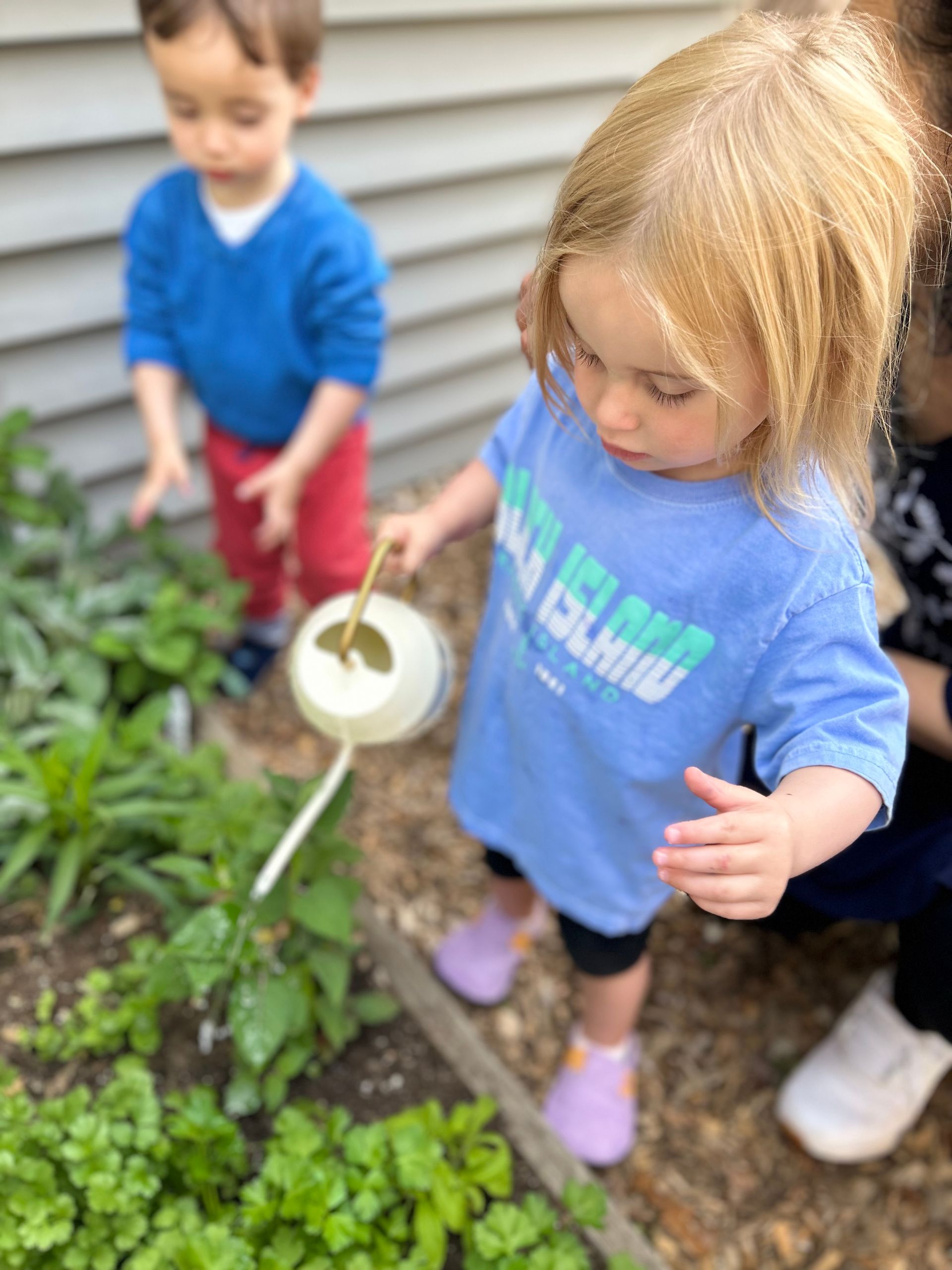
The summer months can sometimes feel like a long stretch, especially when we are trying to figure out how to keep our children engaged, or at least entertained. However, if we think about the big picture of what children really need, it can be easier to think about activities that will satisfy those needs and support natural development.
What Do Our Children Really Need?
When Dr. Maria Montessori first began working with children, she approached her work with a scientific mindset. She observed tendencies, needs, and behaviors of human children the way a scientist might observe animals in the wild. In this way, Dr. Montessori was able to identify inclinations young humans have toward particular behaviors or characteristics. Some of the tendencies Dr. Montessori observed include:
- to explore
- to orient
- to have or create order
- to work
- to strive toward self-perfection
Let’s take a look at these human tendencies in relation to how we structure summer days with our young children.
Exploration
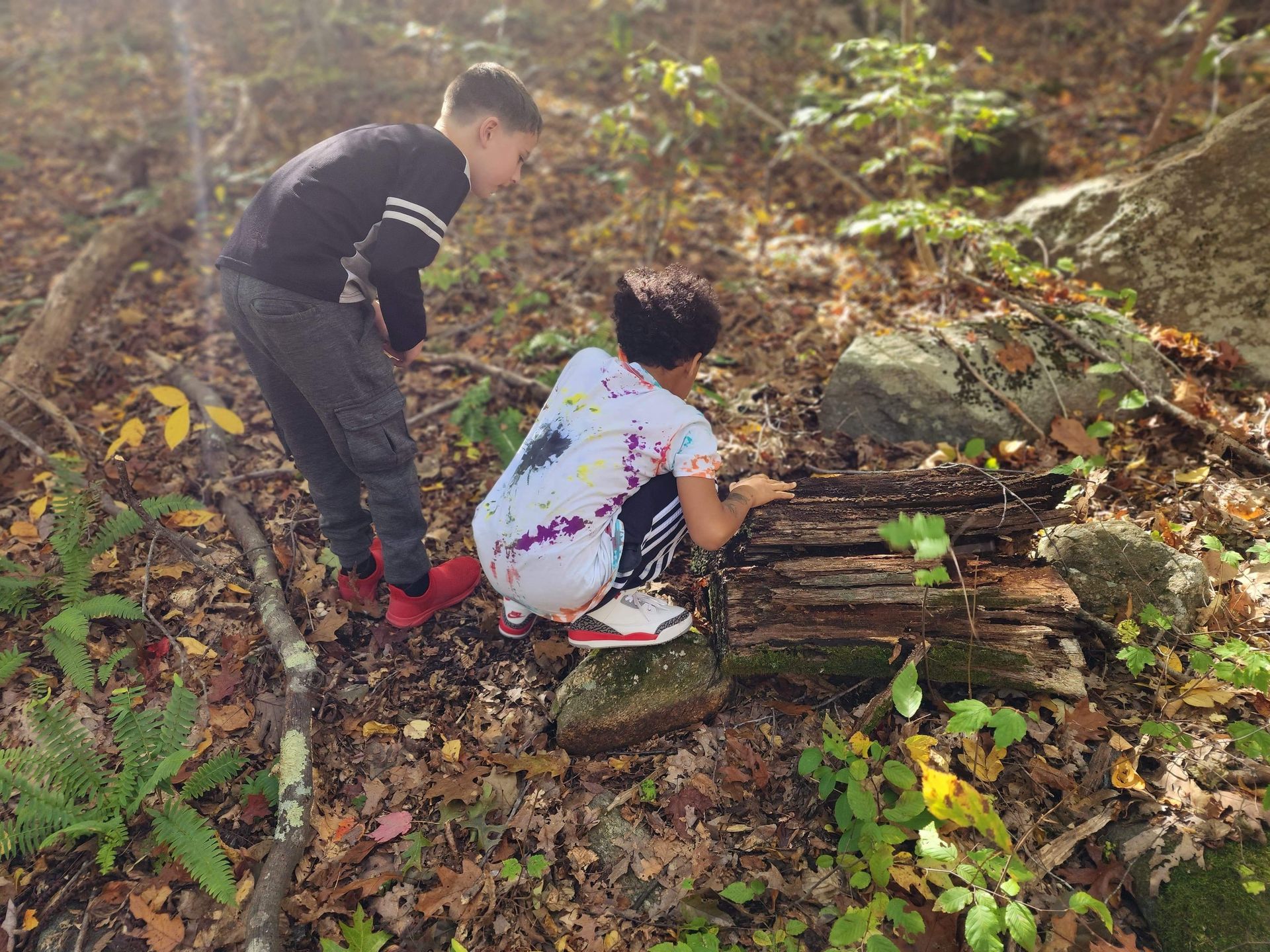
Humans have a need to explore. Early humans needed to explore their environment to discover where and what to eat, to find shelter, etc. Our infants, babies, toddlers, and young children explore in order to adapt to their environment and learn about the world. From our infants’ early days when they explore using their senses (smelling, tasting, hearing, and then tracking with their eyes) to when our babies grasp, slither, scoot, crawl, stand, and walk, children under the age of six are sensorimotor learners. They have to explore using movement and their senses to make sense of their boundaries of self.
Exploration may be one of the easiest parts of summer. With the warm weather and long days, there is ample opportunity to find new parks, traverse new trails, or even just see what happens when you wander down the sidewalk with your child. The key is to focus more on the process than the destination. A simple nature walk may be long in duration but short in distance. For example, young children will appreciate the time and space to stop and explore what is happening with the busy ants in the sidewalk cracks.
Incorporating different senses and movements makes exploration most meaningful for children. Get creative! After a trip to the farmer’s market, collaborate with your child to create a colorful array of foods to sample together. Pick a few places outside where you can lie down with your child, listen, and gather sounds. Share what you heard. Draw pictures of what you think made the sounds. Or maybe go on a scent journey around your yard or neighborhood. See what smells you can find!
Orientation
Orientation is needed to find our way. In order to be able to explore, humans have needed to be able to orient themselves. We need to put ourselves in relation to our surroundings in order to find our way around in a new environment. Disorientation comes from not being secure in our surroundings. The process of orientation is a process of creating relationships: where or what am I in relation to this place?
Young children have a need to orient themselves to culture (through customs, food, language, etc.), as well as routines and places. They need to know what life is like so they can adapt accordingly. We can support this orientation by introducing our children to the routines, customs, and expectations of the summer months.
If regular library visits will become part of the summer routine, take time to visit the library space and orient to different components of the building (the bathroom, the checkout counter, the reading nook, etc.), as well as norms of behavior within the library walls. If you’ll be outdoors picnicking or connecting with friends for lunch, taking a few moments to make sure your child knows what to expect can make all the difference.
Order
We rely upon order in our environment, from segmenting 24 hours of a day to having laws that lend order to our communities. Order helps us have a sense of safety, control, and stability. For children, order is essential. They need constant points of reference to be able to orient themselves to the world. Children need to be able to anticipate the day. If we change the order of events, that can throw our children off balance. In fact, it’s not uncommon to see some regression in our children when change happens.
How do we create order during the summer, a time when schedules can be less constant? Building a little time into the morning routine to go over the plan for the day is one easy way to help children feel secure about what to expect. While slightly older children can grasp an overview of the week, especially if presented in visual form, younger children live more in the moment. They depend upon a regular rhythm. So even if summer schedules shift, it’s best to try to keep some regular touch points to ground the day. Even if the time gets adjusted slightly, keeping true to things like rest time after lunch or bath before bedtime, helps young children feel like the day has a predictable order.
Work
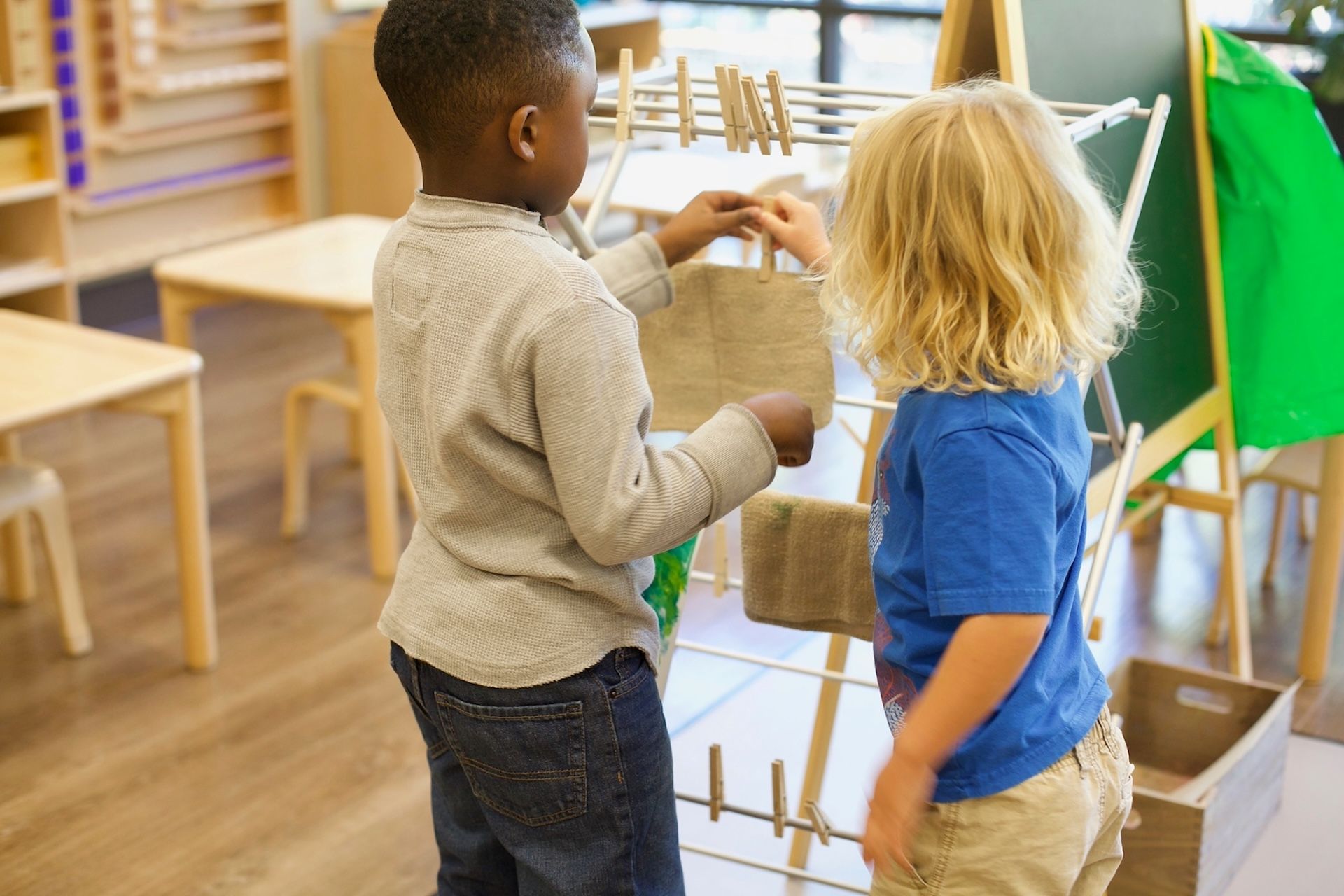
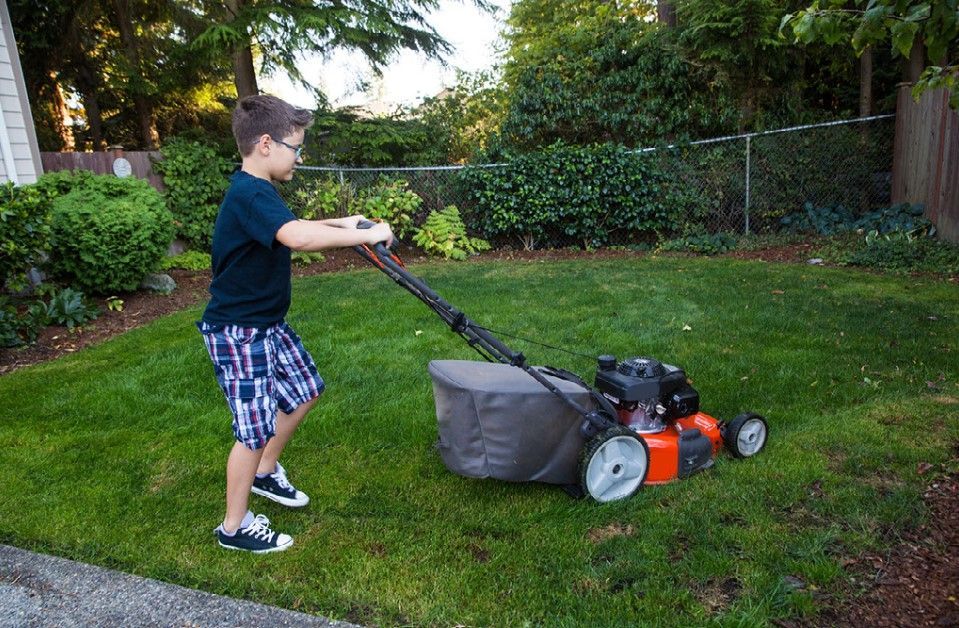
All of us have a natural tendency toward activity. Work is the way we achieve a purpose or result through mental or physical effort. Our children want to contribute in meaningful ways to the work of our lives. This is most successful when we can build in time for our children to accompany us with household chores or general maintenance.
During the summer months, much of this kind of work can happen outdoors–washing the car together, watering the garden, cleaning outdoor furniture, or sweeping the patio. Whatever you decide to offer, make sure you’ve tested out the tools to make sure they work. For example, can your child squeeze the sponge and reach down into the bucket of soapy water? Can your child carry the watering can? How much water comes through the hose when it is turned on? By paying attention to a few details, we help our children experience successful work and contribution.
Self-Perfection & Repetition
Mastery is achieved through bringing our work to completion and often this requires a great deal of repetition. This tendency for perfection is what has allowed for the advancement of human civilization. Becoming more proficient requires repetition, exactness, and a quest for self-perfection. We can see children perfect their skills as they learn to walk and talk. They keep trying until they achieve mastery.
To help our children master what they set out to do and then be able to advance, we can be sensitive to how our young children are observing movements around them and perfecting the movements they see through repetition and precision.
Summer is a fabulous time to focus on large gross motor activities that perhaps couldn’t happen as easily during the colder months. Find a space outdoors for your child to practice walking along a line or a board lying flat on the ground. Or create little obstacle courses for your child. This can be as simple as creating chalk circles to hop in, then crawling under something, before finally tossing a bean bag into a bucket. Or you can blow bubbles that your child can chase and try to catch (or pop!). Follow your child’s lead in terms of what is engaging and allow them plenty of time for repetition.
As we move into the summer months, keeping these tendencies in mind can help us provide satisfying experiences and opportunities for our children.
Subscribe to our Blog
You might also like