
Supporting Independent Sleep
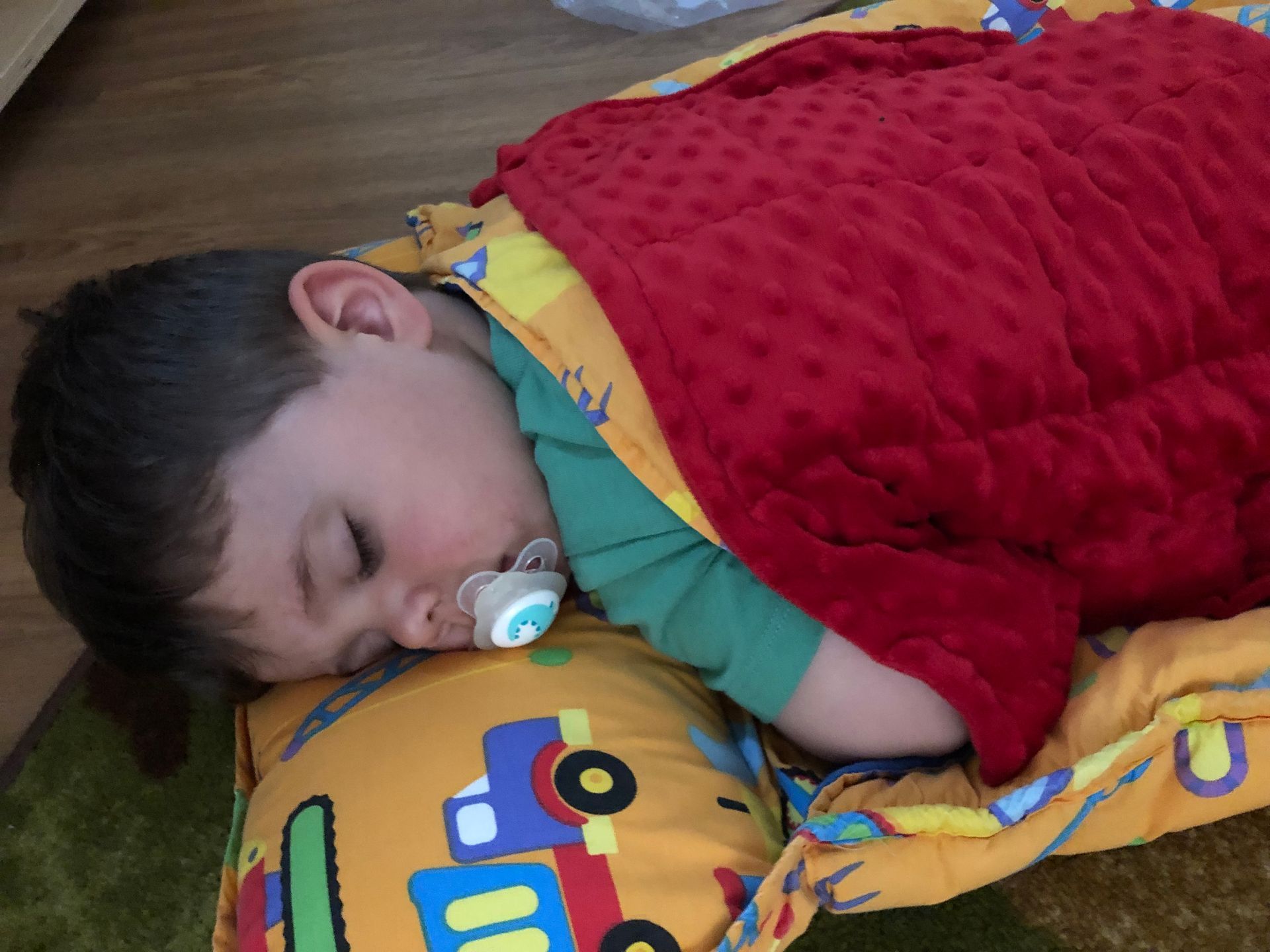
In Montessori, we talk a lot about independence because we want to help children in their process of becoming capable young people! For our youngest children, this means supporting them in mastery of basic functions such as eating, toileting, and sleeping. Supporting independent skills in these three areas is pretty significant because these are parts of life where children ultimately have complete control over what does or doesn’t happen. So it makes sense for us to avoid setting up obstacles in these areas and instead help children develop skills that will build up their confidence.
Our Language Matters
The language we use is indicative of our goals. For example, when children are learning to use the toilet, we make sure our language reflects that process. We aren’t “training” children like we might train a pet. We are helping them learn life skills so they can be well-functioning humans who understand cultural norms. In fact, we even call what we do “toilet learning” because children are learning how to take care of their bodily needs by using the toilet.
Similarly, when thinking about children and their sleep, we are not “sleep training” like we might crate train a new puppy. Rather, we are supporting children’s natural process of learning how to settle themselves, self-soothe, and eventually fall asleep independently.
Importance of Sleep
With more and more research about the role sleep plays in brain development, growth, and learning, we have a responsibility to educate ourselves about how best to promote healthy sleep hygiene. A 2007 study states “that the most fundamental requirements for healthy growth and development in young children include a) loving support and protection by parents/caretakers, b) adequate nutrition, and c) adequate sleep.” A 2020 review of sleep and early brain development details how “sleep plays a critical role in learning and memory, emotional regulation, and related brain structure development.” Establishing healthy sleep practices in the early years is critical for our children’s development. So how can we best do this?
Focus on Four Factors
In order to help our children have trust in us and strengthen a secure attachment, we need to provide safe boundaries. This includes helping them learn what is acceptable and what isn’t in regard to sleep. Just like we hold boundaries for dental hygiene, we can uphold healthy sleep habits, too!
To promote healthy sleep hygiene, we can focus on four factors:
- establishing an environment that is conducive to sleep,
- maintaining regular routines,
- providing suitable associations for the onset of sleep, and
- upholding limits while making adjustments throughout childhood.
Sleep Environment
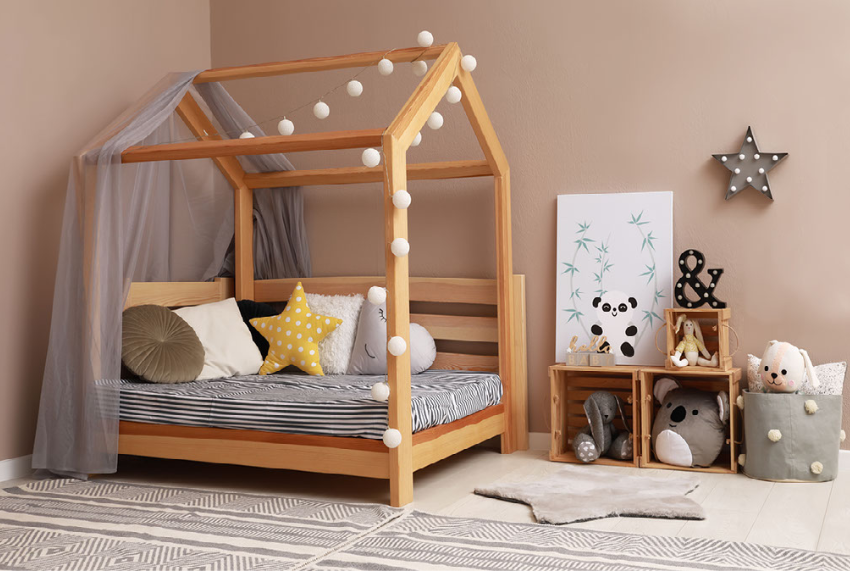
To create a place that is conducive to sleep, it can be helpful to think about our own sleep needs. Are we more likely to fall asleep in a bright, noisy, active environment, or in one that is dark, quiet, and calm? The same applies to our children. A comfortable sleep environment should be dark because sleep hormones are triggered by darkness. Plus, natural and blue-based artificial light stimulates alertness. Black-out blinds or curtains (as well as aluminum foil over the windows in a pinch) help immensely. The designated sleep space, whether a bedroom or other area, should also be calm, quiet, and free of distractions like toys or other interest-provoking items. Finally, it’s best if the room temperature is slightly cooler.
Regular Routines
Our children depend upon us to establish healthy and consistent routines, including times for rest. When children stay up past their nap or bedtime, they can enter into an overtired zone. At this point, they experience a stress response, which leads to the release of adrenaline and cortisol. This influx of chemicals causes a “second wind” and children can become even more energized and awake, despite their intense need for sleep.
To avoid this vicious cycle, it’s important to learn our children’s sleep window, which is the time it is easiest for the brain to switch to sleep. Children actually give us cues as to when they are in a window for sleep. They might begin to have some difficulty listening, lose focus, or become a little more irritable. Some children may rub their eyes, go for a comfort object, or seek contact with a caregiver.
Every child is a little different, but when they start to indicate they are in a sleep window, it is time to wrap up the routine. The process should be very simple, for example, pajamas, toileting, teeth, one story, a hug, and a kiss. It’s better for extensive reading and a long bath to happen before the sleep window because these activities can very easily push children past the window of opportunity and lead to them entering the overtired zone. A predictable, simple pre-sleep routine allows children to unwind and feel secure in knowing that sleep is happening next.

Sleep Onset Associations
When children fall asleep, they form associations with the conditions that are present at the time when they actually drift off. So if we rock our children, read to them, or even snuggle in their bed next to them until they fall asleep, our children learn that they need that condition to be present in order to fall asleep. This also means that as children awake slightly during normal sleep cycles, they look for the same conditions they had when they first fell asleep. If children can’t recreate those on their own, they become dependent upon adult intervention, which can then can lead to more frequent night wakings.
Thus we need our children to go to bed when they are drowsy but still awake, so they can develop appropriate sleep onset associations. We can sing a song, read a book, or rub their back. However, we need to end any of these activities before our children actually fall asleep. We need to leave them while they are heavy-eyed but not yet asleep! Transition objects can help children, too. Some might like a special blanket, doll, or stuffed animal, which they can use to self-soothe as they drift off to sleep.
Limits & Adjustments
Sleep patterns change throughout early childhood and beyond. So while children need us to be consistent, they also need us to understand developmental changes. It can help to use resources like the Sleep Foundation to check on recommended hours of sleep for different developmental stages.
As children get older, they also get more sophisticated in trying to prolong the bedtime routine or keep us engaged when actually we should be stepping out of the process to allow them to fall asleep on their own. Work collaboratively with your child to establish or reestablish the routine (and the limits). Write down the routine and revisit it before bedtime. Stay calm and consistent.
Children are hard-wired to test the boundaries and are just checking to make sure we are going to stay true to the agreement. If you feel like you are going to break down and not be able to uphold the agreement, find someone who can be your backup or reinforcement. If you are doing bedtime alone, find a friend who you can text or call and who will remind you about staying true to what was established.
Above all, make sure you are taking care of yourself! If you are sleep-deprived it is much harder to hold limits or think clearly about the long-term goal of helping children become independent and capable young humans. If you ever want to talk or need support, we are happy to help. We love to share resources and support families!
Subscribe to our Blog
You might also like