Looking on the Positive Side

March 20, 2023

Our brains are hardwired to look for problems and generate solutions. In The Neuroscience of Change, Kelly McGonigal, a health psychologist and lecturer at Stanford University, explains how this brain state has been helpful for human evolution so we can improve our state of being. Looking for what’s wrong, however, often prevents us from seeing what is good in the present moment.


Because of our negative bias, we can easily become focused on what children need to do better: pick up their clothes, get ready faster, be quieter, solve math problems better, make less mess, and on and on. As a result, our children can easily be bombarded by what they are not doing right.


Clear Feedback & Encouragement


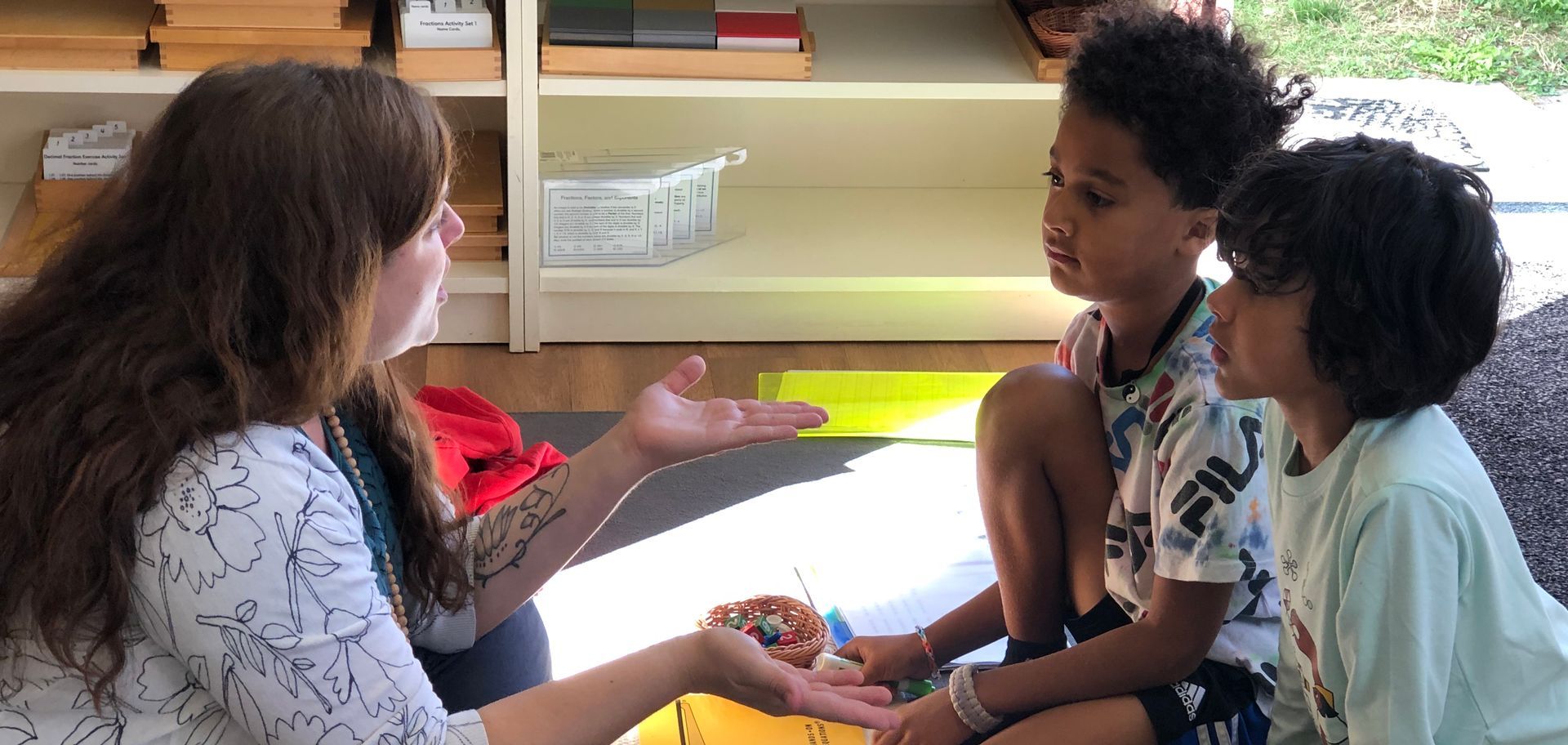
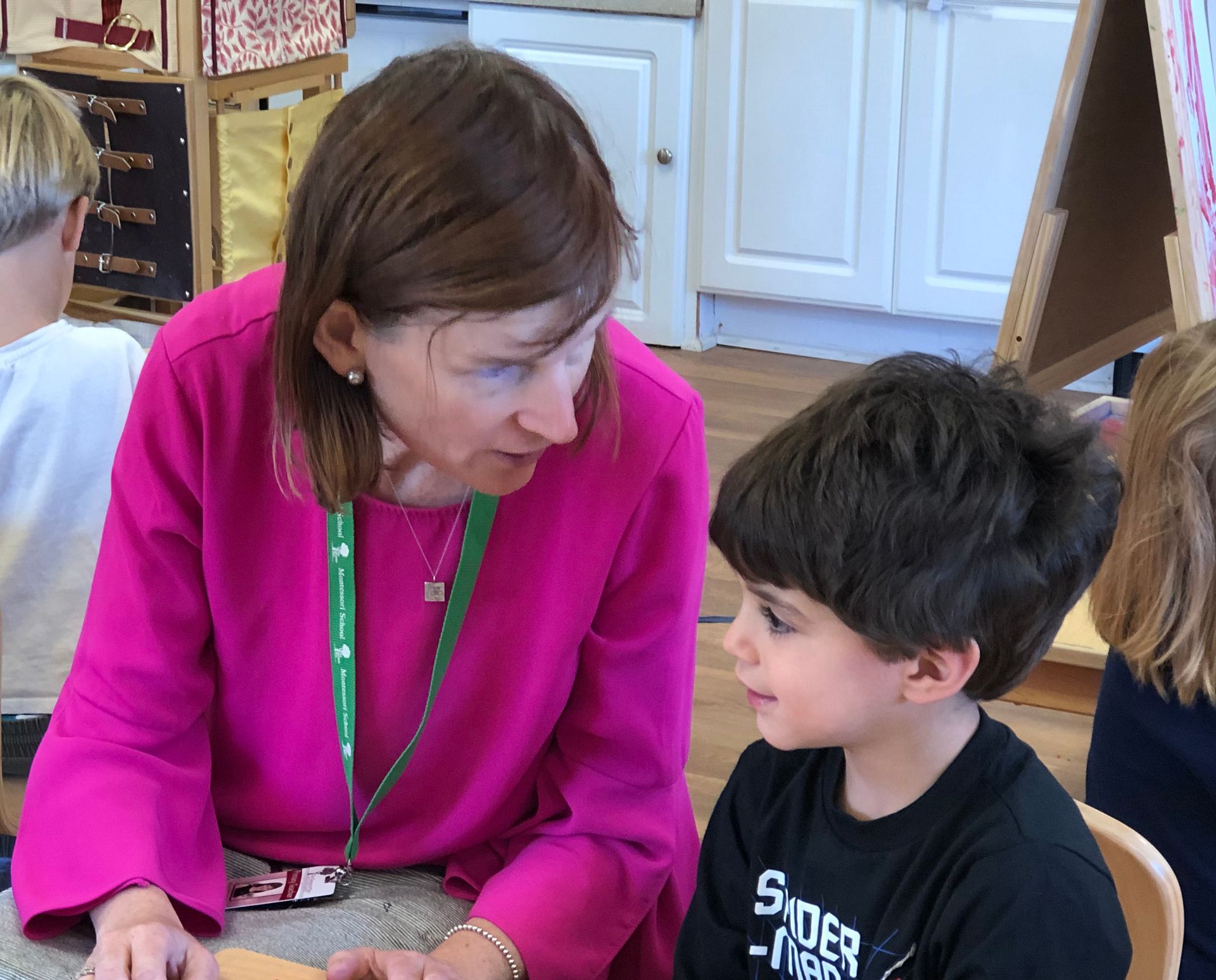
In Montessori environments, we focus on offering clear, accurate feedback and encouragement, which includes acknowledging children’s work and effort. We want children to develop an internal drive so they can be independent, responsible, thoughtful learners and community members. 


To support this development, our feedback and encouragement are focused on what is happening for children internally. We acknowledge what children might be feeling and the effort involved. Instead of the focus being on what the adult is feeling, we reflect upon children’s experiences. So rather than saying “I’m so proud of you,” we might say “You look very proud,” or “You worked so hard. Congratulations!”


Phrases of encouragement or positive feedback work best when backed up by evidence. For example, “I noticed how your friends looked relieved when you offered to help sweep up the spilled rice. They seemed to really appreciate your kindness.” Or “I saw how you looked frustrated and then how you took a deep breath. You showed a lot of self-control at that moment.”
State the Positive


Developmentally, young children need to hear requests or reminders framed positively. They need to know the expected behavior and they need us to state what we expected to see. If we say, “don’t hit,” young children cannot easily differentiate between the commands “hit” and “don’t hit.” The last word they hear is “hit,” so that is the image that lasts in their minds. Thus, statements like “don’t run” or “don’t hit” aren’t as effective for our young children. 


Rather than saying what not to do, we focus on the behavior we want to see. Statements like “walk, please,” “touch gently,” or “please talk quietly” offer a clear and positive image of what to do. Children hear how to be successful and thus can more easily be successful. 


Catch Them Doing Something Right


In addition to these clear directions, we can recast children’s self-image by acknowledging times they are making a good choice. In doing so we are providing our children with positive attention. All too often children get attention when they are engaged in behaviors we don’t like. Children then quickly learn that they need to act out in some way if they want attention. To counter this trend, we need to catch our children doing something right. 


Building a Foundation


If we are caught in a cycle of only seeing the negative, one way we can change our outlook is to make a list of all the things our children have done right over the course of a day. When we start noticing and acknowledging the good stuff, we help create a positive feedback loop. Young children also love hearing a story about their day that highlights the positive choices they have made. 


In Different Learners, Jane M. Healy, Ph.D., offers a strong reminder about the profound influence we have on our children: “One thing brain research tells us – loud and clear – is that the way we raise and teach our children not only helps shape their brains, but can also influence or even alter the way genes play out their roles.” 


In this season of new growth, let’s offer positive reminders and in-the-moment acknowledgments to help our young people develop successfully. By doing so we will also be helping ourselves see the world in a more positive light. 


We also encourage you to come to visit our school to hear how the adults and children in our community interact with each other in positive ways!

Subscribe to our Blog

You might also like
By Danielle Giordano February 4, 2026
The body content of your post goes here. To edit this text, click on it and delete this default text and start typing your own or paste your own from a different source.
By Danielle Giordano January 30, 2026
In Montessori elementary classrooms, we like to introduce big ideas with big stories. We offer children a sense of wonder first, sort of like an imaginative doorway, so that when they later study formulas, theorems, and proofs, they already feel connected to the human story behind them. One of these stories is The Story of How Geometry Got Its Name, an introduction to a subject that is far older than the textbooks and protractors we encounter today. In Montessori, Geometry is more than about shapes. It is about human beings solving real problems in the real world. A Problem as Old as Civilization To introduce geometry, we take children about five thousand years back in time to the ancient civilization of Egypt. This was a land shaped by the , the longest river in the world. Each year, the Nile flooded its banks as snowmelt poured down from the mountains far to the south. The Egyptians depended on this yearly flood as it left behind rich, dark silt that nourished their crops and made life possible in an otherwise harsh desert. But the flood created a challenge, too. It washed away the boundary markers that separated one farmer’s field from another. When the waters receded, no one could quite remember where their land began and ended. Arguments ensued. “This corner is mine!” And the fields needed to be measured and marked again. The First Geometers: The Rope Stretchers To solve this annual problem, the Egyptians relied on a special group of skilled workers called the Harpedonaptai, or Rope Stretchers. These were early land surveyors who used a knotted rope tied at regular intervals and three weights to create a very particular triangle. In the classroom, we invite a few children to hold a prepared rope at its large knots, forming that same triangle. As they stretch it out and lay it on the ground, many quickly recognize what the Egyptians had unknowingly created: a scalene right-angled triangle. This shape would later become central to the geometry studied by Greek mathematicians. The Rope Stretchers used this simple tool to re-establish field boundaries, set right angles, and make sure the land was measured accurately and fairly. Geometry, in its earliest form, served a deeply practical purpose. From Rope to Pyramid The Rope Stretchers’ expertise was valued far beyond the farmlands. They also helped lay out the foundations of temples, monuments, and even the Great Pyramid of Giza. The base of the Great Pyramid is a perfect square, which is an astonishing feat of measurement and design. The Pharaoh himself oversaw these measurements, but it was the Rope Stretchers who executed them. Their work represents one of humanity’s earliest recorded sciences: the careful measuring of the earth. How Geometry Got Its Name The name geometry reflects this ancient practice. It comes from two Greek words: gê — earth metron — measure Geometry literally means earth measurement. The Egyptians did not use the language of right angles, nor did they classify triangles as we do today. Their work was grounded in practical needs. They needed to solve problems, organize land, and create structures that would endure for thousands of years. Yet their discoveries influenced later thinkers like Pythagoras, who likely traveled to Egypt and learned from their methods. Over time, the simple knotted rope inspired a whole discipline devoted to understanding lines, angles, shapes, and the relationships between them. Why We Tell This Story in Montessori When Montessori children hear this story, something important happens. Geometry becomes more than a set of rules or vocabulary words. It becomes a human endeavor born from curiosity, necessity, and ingenuity. This is the heart of Montessori’s cosmic education: helping children see knowledge not as isolated subjects, but as gifts from generations before them. When children pick up a ruler, explore angles with a protractor, or classify triangles in the classroom, they are continuing a legacy that began with those early Rope Stretchers on the banks of the Nile. Through story, children feel connected to the people who shaped our world and to the problems that inspired great ideas. Schedule a tour today to see how geometry becomes meaningful, purposeful, and alive for our children here in Old Saybrook, CT.
Gratitude: Why We Celebrate the Unsung Heroes
November 25, 2024
As elementary children admire heroes, Montessori uses this to inspire leadership, cooperation, and appreciation for both known and unknown heroes.
More Posts