Moving Away from How Was Your Day?

Shaina Dube • September 18, 2023

When we pick up our children from school, it can be so tempting to ask, “How was your day?” Often the responses are pretty lackluster. 


As adults, we can likely relate. If a partner or friend asks about our day, our responses may be along the lines of fine, good, tiring, okay. Sometimes we just don’t feel like rehashing the day! 


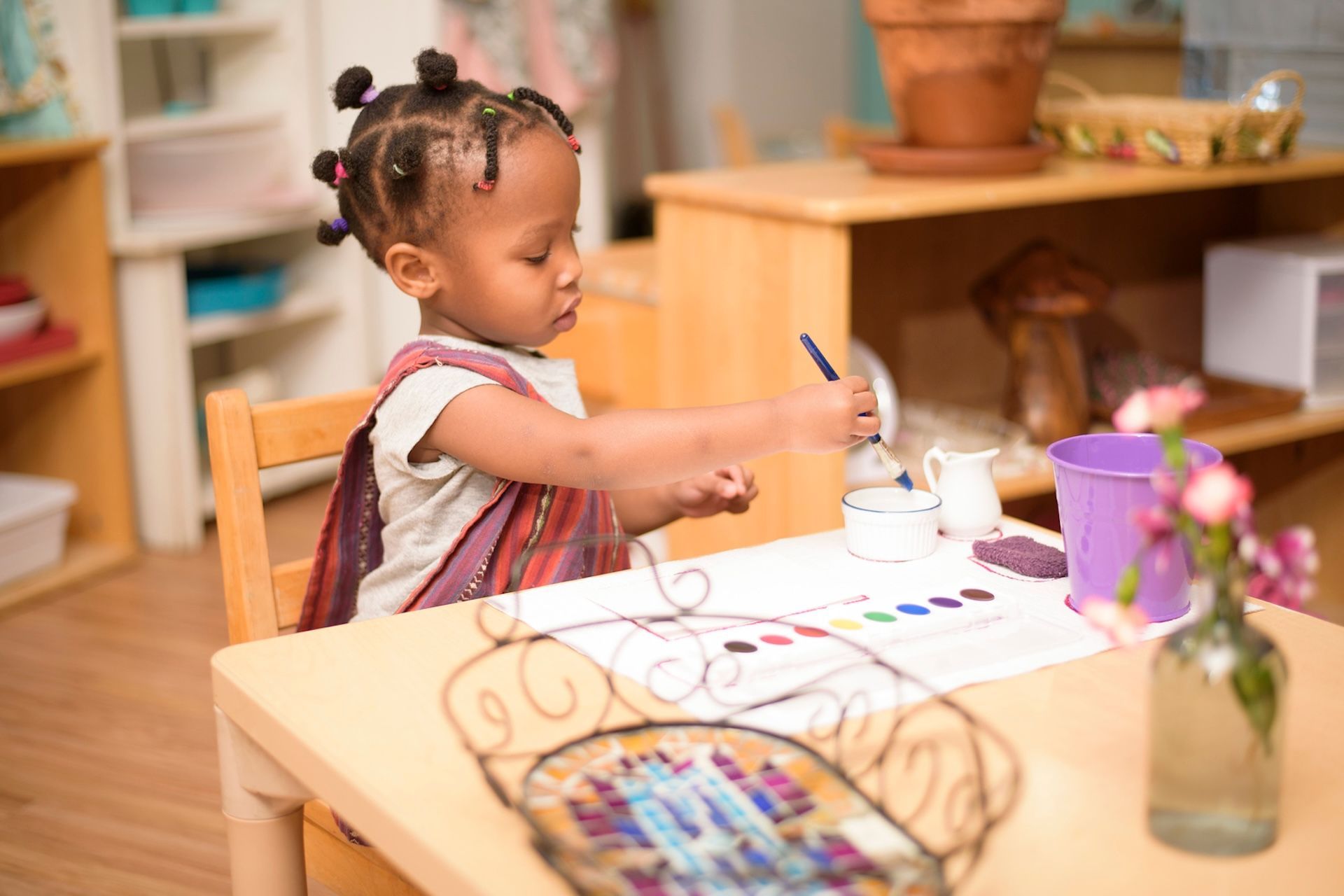
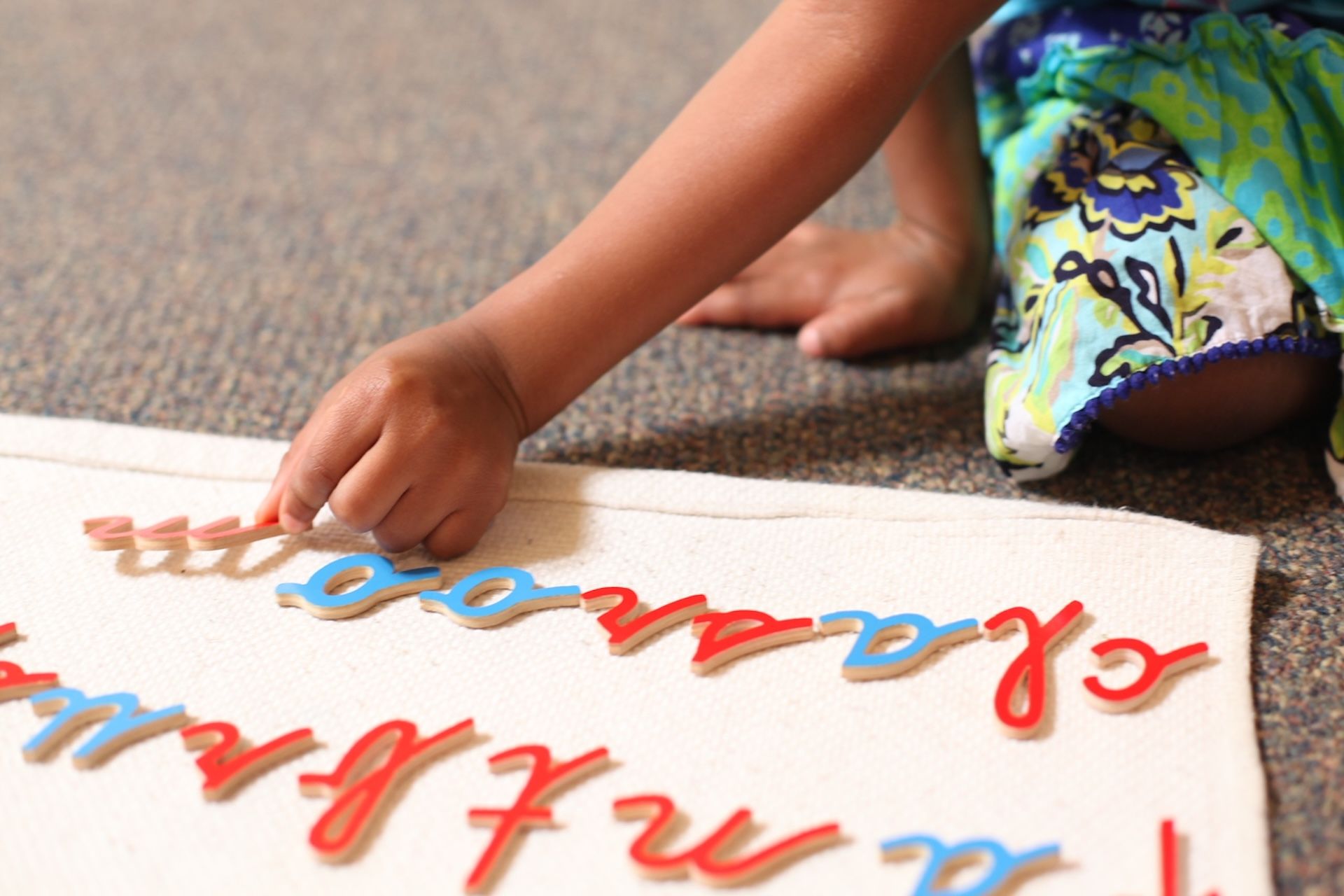
For children, there can also be an element of not always having the language to explain what they did or experienced. In Montessori environments, this can be even more challenging. How can a young child describe the sensorial experience of carrying each block of the pink tower to a rug and creating a geometric tower of cubes based on the decimal system? Or convey their emerging conversation with a friend during community lunch? Or relate their delight in discovering that ten 10s create a hundred squares?


As children get a little older, they are also starting to grapple with figuring out their relationships with peers, which involves so many social nuances. Younger elementary-aged children are still seeing these relationships in black and white. So their descriptions of the day may be pretty two-dimensional: someone was mean or nice, the day was good or bad (usually based on an interaction with a friend), etc.


It can be hard for children to talk about their experiences at school. However, if we shift our approach, we can often get more insight into our children’s experiences.


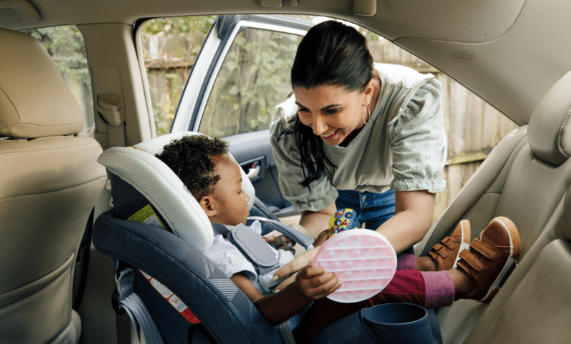
Ideally, we focus on connection first. When we see our children at the end of the school day, we can greet them in a way that conveys how happy we are to see them. They may be tired, need to fall apart a little, have a snack, or just have a little time for rejuvenation. Allow a little loving space. Each child has a different way they feel fueled, loved, seen, and held. That first moment isn’t an ideal time to ask about the day because our children are transitioning into being back in our care. Plus, there is a lot going on during that transition!


Later, when our children have settled into being with us or at home, and hopefully have had a snack or a little time to decompress, we have a chance to connect about the day. However, a word of caution: questions like, “How was your day?” or “What did you do today?” are so open-ended, they can also feel overwhelming to children. 


Instead, when we focus on starting a conversation rather than digging for information, our children are more likely to open up. They also need to feel that we are completely present for their responses, which means putting down our phones, not focusing on getting everyone into or out of the car, or not being involved in something like preparing dinner. It helps when we can show with our body language that we are really listening.


In those times when you are ready to explore a conversation, we recommend trying some other kinds of questions. Here are 40 of our favorites. The first five work best for younger children.
  1. What made you feel happy today?
  2. Who did you play with today? What did you do together?
  3. Who did you sit with at snack/lunch today?
  4. What made you feel sad today?
  5. What was your favorite activity today?
  6. Did everyone have someone to play with today? Who played together?
  7. Who brought the best food in their lunch today? What was it?
  8. What was your favorite thing in your lunch box?
  9. What games did you play at recess?
  10. What is the most popular activity at recess? Is it something you like to do? Why or why not?
  11. Did someone get in trouble at school today? What did they do?
  12. What did you notice today that other people probably didn’t see or pay attention to?
  13. What is something you did today that you’d love to do every day?
  14. How did someone fill your bucket today? Whose bucket did you fill?
  15. What made you feel worried today?
  16. What made your teacher smile? Did anything make your teacher frown?
  17. What were you grateful for today?
  18. If one of your classmates could be the teacher for a day, who would you want it to be? Why?
  19. What is your class or teacher’s most important rule?
  20. Who do you want to make friends with but haven’t yet? Why?
  21. What did you learn about a friend today?
  22. If aliens came to school and beamed up three kids, who do you wish they would take? Why?
  23. What did you do today that was helpful?
  24. When did you feel most proud of yourself today?
  25. What rule was the hardest to follow today?
  26. Which person in your class is your exact opposite?
  27. Who is the friendliest person in your class? What do they do to be friendly?
  28. What did you do today that was creative?
  29. Did your teacher read to the class today? If so, what was the story or book about?
  30. What was the high point of your day? What was the low point?
  31. Was anyone in your class absent today? Do you know why they weren’t there?
  32. What is something you heard that surprised you?
  33. What is something that challenged you?
  34. What is something that you were super good at today?
  35. What compliments did you get (or give) today?
  36. How were you brave today?
  37. If you could change one thing about your day, what would it be?
  38. How was your day different than yesterday?
  39. What superpower would have come in handy today?
  40. What are you looking forward to tomorrow?


After a snack, over dinner, on an afternoon walk, or before bed, try starting conversations with these kinds of questions. Notice that most of them can’t be answered with one word. 


In addition, we can also provide our own responses, which provides a model for our children and gives them some scaffolding as they are thinking about how to answer. For example, “At lunch today I sat with someone who just started working with me. We talked a lot about going hiking and I shared some of my favorite hikes.” Or “When I was about your age, we loved playing capture the flag. One of my favorite memories of this game was when…” Sharing parts of our day or some of our own school memories not only shows that we are interested in conversation, but it also gives our children a guide for how to begin.


Let us know how it goes to first connect and later start conversations with open-ended questions. If you have any conversation starters that you and your children especially love, please share them! You can also download this printable of our favorite 40 questions to keep handy for those opportune moments.

Subscribe to our Blog

You might also like
By Danielle Giordano March 9, 2026
When children begin working with pronouns in Montessori, they are not learning something entirely new. Instead, they are bringing to consciousness language they already use every day. Pronoun work builds slowly and intentionally. It is not about mastering grammar rules, but about understanding how language functions and how meaning is carried when words stand in for one another. Beginning With Experience, Not Explanation Montessori pronoun work begins with movement and spoken language, not written grammar. We start with little oral games to highlight how a pronoun functions, sometimes eliminating the pronoun (“Josie and John and Jack and Josiah are walking around the table.”) and other times emphasizing the pronoun (“They are walking around the table.”). The children love acting out the phrases, sometimes chanting, moving, watching one another, and laughing. Through these physical experiences, they begin to notice that we don’t always use names when we speak. Certain words take the place of a noun, and the meaning is still clear. At this stage, we don’t offer the term pronoun because we want children to simply experience its function. From Movement to Sentences Once children are ready for more structured language work, we introduce them to the Pronoun Grammar Box so they can build and rebuild sentences using color-coded cards for each part of speech. From one sentence to the next, only a few words change as nouns get replaced by pronouns. By comparing sentences, children discover that although the word changes, the sentence still makes sense. This comparison is essential. Rather than being told what a pronoun is, children see what it does. We then invite children to add grammar symbols to the sentence (noun, article, adjective, verb, preposition, adverb) until we finally draw attention to the remaining word: “This word is used in place of a noun.” Only then do we introduce the pronoun symbol: a purple isosceles triangle, the height of the noun symbol. Montessori Lore: The Pronoun’s Story There’s a beloved story about the pronoun symbol. Long ago, the pronoun was shorter and a different color. Wanting to be as important as the noun, it stretched itself taller and taller to reach the same height. As it stretched, its base became smaller and it turned purple from the effort of standing in the noun’s place. It’s a poetic reminder of what children discover through their work: a pronoun depends on the noun, borrowing its meaning while standing in for it. Why Pronouns Come Later Pronouns are more abstract than other parts of speech. To understand a pronoun, children must already have a strong, concrete understanding of the noun. For this reason, pronouns (along with interjections) are typically introduced later than other grammar symbols, often in the elementary years. Even then, one lesson is not enough. In Montessori, the real learning happens after the presentation, when we step back and children work independently with the material. The guide’s role is to show how to use the material, not to explain grammar in detail. Understanding emerges through repeated use. Deepening Understanding Through Play and Exploration As children grow more confident, the work expands to include: Transposition games, where pronouns are removed or replaced to explore how meaning changes. Command cards, which physically isolate pronouns through action. Personal pronoun charts, introducing first, second, and third person (singular and plural) through storytelling. The Verb Family, where children explore the close relationship between the verb, adverb, and pronoun. Children discover that pronouns often work closely with verbs, helping to carry action and meaning through a sentence. Subtleties Come Later At first, Montessori avoids getting caught in fine distinctions. Over time, children may explore nuances such as the difference between possessive pronouns (the book is mine) and possessive adjectives (my book). These discussions often happen later, sometimes with the support of grammar references, once children have a solid foundation. Language Revealed, Not Taught Through this carefully layered progression of movement, sentence work, symbols, and exploration, children develop a deep understanding of how words function differently in sentences. Montessori grammar invites children to discover how language works at their own pace through hands-on exploration. We don’t rush this process. So by the time children are ready to name the pronoun, it’s not a new idea. It’s something they already know. We invite you to visit our classrooms in Old Saybrook, CT to see firsthand the children’s joy of learning!
By Danielle Giordano March 1, 2026
March 1 marks Baby Sleep Day
By Danielle Giordano February 10, 2026
When we pick up our children from school, it’s almost automatic to ask, “How was your day?” And just as automatically, the answers tend to fall flat: fine, good, okay, or sometimes nothing at all. As adults, we can probably relate. When someone asks about our day, we don’t always feel like revisiting every detail, especially before we’ve had a chance to rest or reset. For children, this challenge is even greater. In Montessori environments, children are immersed in experiences that are rich, complex, and often difficult to put into words. How does a young child explain the sensorial experience of carefully carrying each cube of the Pink Tower across the room? Or describe the quiet satisfaction of discovering that ten tens create a hundred square? Or articulate the subtle social negotiations that happen during community lunch? Even for older children, language often lags behind experience. Why “How Was Your Day?” Can Feel Like Too Much As children move into the elementary years, they are also navigating peer relationships that are still very black and white. A single interaction can color their entire perception of the day. So their reports may sound overly simple: someone was mean, someone was nice, the day was bad, the day was good. But often, the issue isn’t that children don’t want to share. Instead, the timing is off. Research on children’s nervous systems helps explain why. When children walk out of school, their brains are often still in a state of high alert. Throughout the day they’ve managed noise, social expectations, concentration, corrections, and constant stimulation. Their nervous system hasn’t fully shifted out of “school mode” yet. So it helps if we remember that we aren’t greeting children in their most rational state. Those first minutes after pickup are a transition, not a conversation window. When we jump in with questions too quickly, even well-meaning ones, we may unintentionally overwhelm our children’s nervous system, which hasn’t had time to settle. Connection Before Conversation In Montessori, we place great importance on transitions. We know children need time to move from one state of being to another, whether that’s arriving at school, moving between activities, or going home at the end of the day. Instead of starting with questions, we can start with presence. When we first see our children, a warm greeting that communicates “I’m happy to see you” goes a long way. Some children need a snack. Some need quiet. Some need movement, proximity, or simply space. This is not the moment to gather information. This is the moment to re-establish connection. When families allow even 10 to 12 minutes of quiet decompression after school, through silence, music, or simply being together, children regulate more quickly. Evening stress decreases, cooperation improves, and children are more likely to talk voluntarily later on. Rather than interrogating right after school. Try coexisting. This pause is deeply respectful. When Children Are Ready to Talk Later, after your child has had time to settle back into your care, you may notice that conversation begins naturally. This is often when children share what mattered most to them, not what we might have thought to ask about. When you do open the door to conversation, gentle specificity helps. Broad questions like “How was your day?” can feel overwhelming. Instead, try comments that invite reflection without pressure: “I noticed you seemed really focused when I picked you up.” “I’m here if you want to tell me about something you worked on today.” “What felt good about today?” Just as important as the words is our availability. Putting down the phone, pausing the logistics, and showing with our body language that we are truly listening makes it safer for children to share. Listening for Timing, Not Just Content This approach applies across ages. Even adolescents benefit from what some call a “quiet landing” after school. When we honor timing, we’re less likely to walk into the emotional residue of the day and more likely to build cooperation and connection later. In Montessori, we often say: regulation comes before reflection. Children don’t need us to extract their feelings. They need us to create the conditions where feelings can land safely. Sometimes that looks like silence. Sometimes it looks like presence. And sometimes, after enough space has been given, it looks like a child finally saying exactly what mattered most. So the question isn’t just “Do I listen to what my child says?” And instead becomes: “Do I listen for when they’re ready to speak?” Curious to learn more strategies to support your child during transitions? Set up a time to come visit here in [Your Town/Location]. We love to connect! .
More Posts