End-of-Summer Bucket (and Book!) List

Tamara Sevigny • August 8, 2022

In Montessori, we believe that learning isn’t just something that always happens in school. Children are naturally curious and want to discover, explore, and learn. By the end of the summer, they are often eager for opportunities to expand their awareness and engage in something meaningful. So why not use these last weeks of summer as an occasion to soak in experiences that will feed your child’s sense of wonder!


To inspire some end-of-summer adventures, this week we are combining the idea of a summer bucket list with our curated book list! 


If your child is older, you can share or post this list and offer a challenge to see how many items they can accomplish before school begins. For younger children, you can use the list as a source of inspiration to enjoy some special time together. 


We’ve included some of our favorite titles under each bucket list item. Heading to the library to gather books on the topic can inspire further exploration or even spark some interest. Although most of the books included are picture books, wordless books, or early readers, even older children can be inspired by a book left out on the kitchen table! Be sure to click on the book title to access the Goodreads description. 


Happy adventuring!


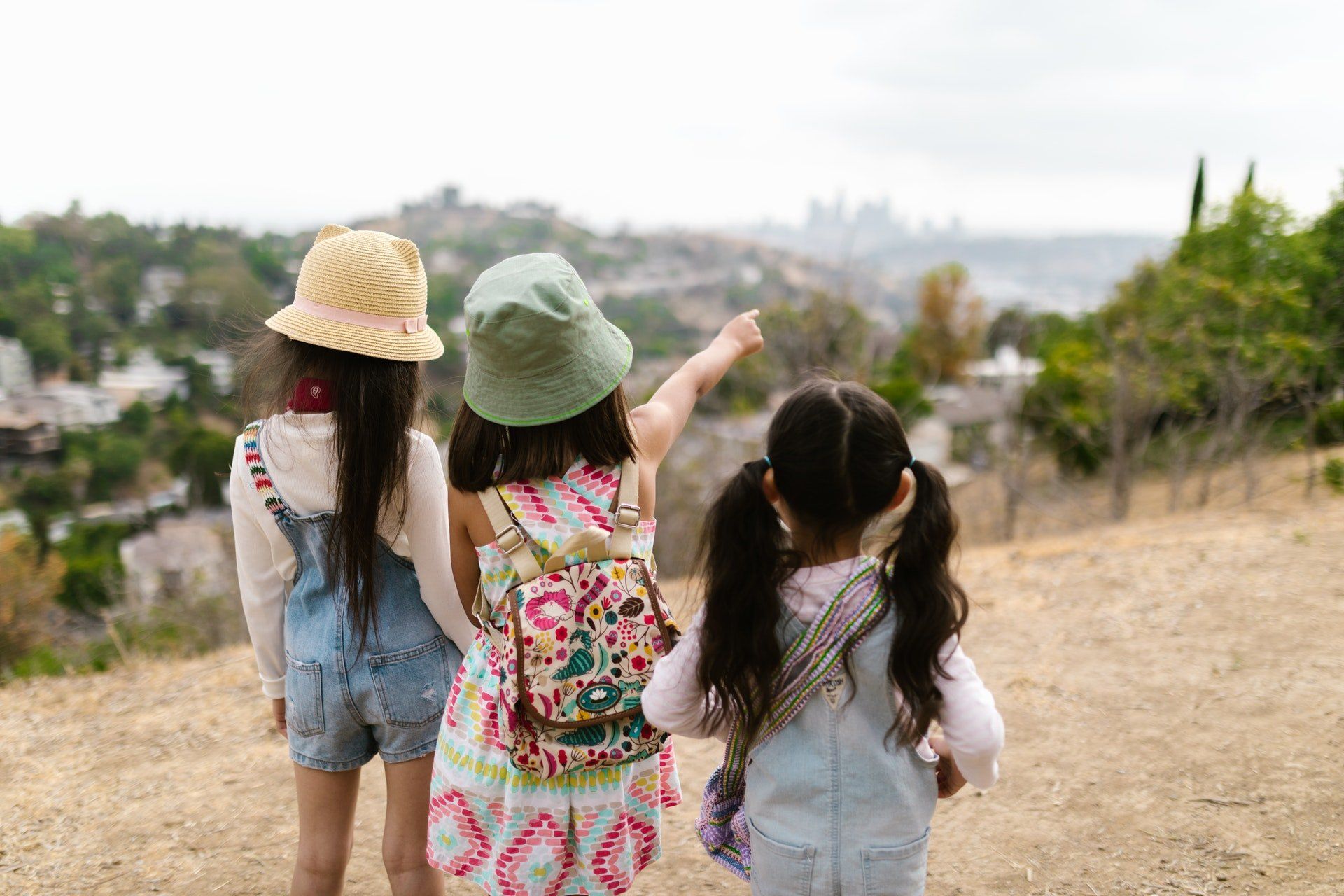
Climb a hill or a mountain. Explore a new hiking trail.

Hike by Pete Oswald

The Hike by Alison Farrell


Walk, bike, or skate along a bike path.

Along a Long Road by Frank Viva 


Canoe or raft on a local river.

River by Elisha Cooper

The Raft by Jim LaMarche


Explore a nature area near your house.

I Took a Walk by Henry Cole

Nature Anatomy: The Curious Parts and Pieces of the Natural World by Julia Rothman 

A Walk in the Woods by Christin Couture


Climb a tree.

Just Like Me, Climbing a Tree: Exploring Trees Around the World by Durga Yael Bernhard 

The Magic and Mystery of Trees by Jen Green, illustrated by Claire McElfatrick 


Learn how to use a compass and map to find your way.

How to use a compass for kids (and adults too!): Your Little Guide to Becoming an Expert Navigator With a Trusty Compass by Henry D Bridges 

My Heart Is a Compass by Deborah Marcero 


Learn how to pitch a tent, make a fire, and cook breakfast outdoors.

S Is for S’mores: A Camping Alphabet by Helen Foster James, illustrated by Lita Judge 

The Kids Campfire Book: Official Book of Campfire Fun by Jane Drake and Mordicai Gerstein, illustrated by Heather Collins

Toasting Marshmallows: Camping Poems by Kristine O’Connell George, illustrated by Kate Kiesler


Make sandcastles on the beach.

A Day for Sandcastles by Jonarno Lawson, illustrated by Qin Leng


Make mud pies.

Mud Book: How to Make Pies and Cakes by John Cage & Lois Long

Mud by Mary Lyn Ray


Search for invertebrates in seaside rock pools or woodland streams.

What's in the Tide Pool? by Anne Hunter

A River by Marc Martin


Build a fort or lean-to in the woods.

Fort-Building Time by Megan Wagner Lloyd, illustrated by Abigail Halpin

A Kids' Guide to Building Forts by Tom Birdseye


Spend some hours making dams and bridges on little streams.

Streams and Ponds: My Nature Sticker Activity Book by Olivia Cosneau 

All the Water in the World by George Ella Lyon, illustrated by Katherine Tillotson 

Build, Beaver, Build!: Life at the Longest Beaver Dam by Sandra Markle, illustrated by Deborah Hocking 

We're Going to Build a Dam by Gillian McClure 


Try catching frogs.

ribbit by Jorey Hurley

a boy, a dog, and a frog by Mercer Mayer


Try catching fireflies in a jar.

Fireflies by Julie Brinckloe 

Fly, Firefly by Shana Keller, illustrated by Ramona Kaulitzki 


Learn how to identify a few constellations and how to find the North Star.

Wishing on a Star: Constellation Stories and Stargazing Activities for Kids by Fran Lee 

Glow-in-the-Dark Constellations by C. E. Thompson 

Zoo in the Sky: A Book of Animal Constellations by Jacqueline Mitton

Once Upon a Starry Night: A Book of Constellations by Jacqueline Mitton


Learn where north, south, east, and west are in relation to your home.

The Compass Rose and Cardinal Directions by Caitlin McAneney

Maps and Globes: A New True Book by Ray Broekel

Maps and Globes by Jack Knowlton, illustrated by Harriet Barton


Watch the Perseid meteor shower (which peaks August 11-12).

Meteor Showers (True Book: Space) by Jane Kelley 

Exploring Meteor Showers (Discover the Night Sky) by Brigid Gallagher


Build a birdhouse (here are some good reasons why!).

Bird House by Blanca Gómez 

Building Birdhouses (How-to Library) by Dana Meachen Rau, illustrated by Kathleen Petelinsek 

The House I'll Build for the Wrens by Shirley Neitzel, illustrated by Nancy Winslow Parker 


Ask your parent or grandparent to teach you how to whittle a piece of wood.

Forest Craft: A Child's Guide to Whittling in the Woodland by Richard Irvine

Whittling Projects for Adventurous Kids by Floris Books 


Be able to name the local birds in your neighborhood (use binoculars, learn to recognize bird songs, etc.).

Backpack Explorer: Bird Watch: What Will You Find? by Editors of Storey Publishing, illustrated by Oana Befort 

Bird Watch by Christie Matheson

My Awesome Field Guide to North American Birds: Find and Identify Your Feathered Friends by Mike Graf 

Have You Heard The Nesting Bird? by Rita Gray, illustrated by Kenard Pak 


Learn the names of the trees on your property or in your area.

Backpack Explorer: Discovering Trees: What Will You Find? by Editors of Storey Publishing 

Trees (Field Guides for Kids) by Andrea Debbink 


Collect something and make a little museum at home (shells, rocks, feathers, postcards of natural wonders, etc.).

What’s in Your Pocket? Collecting Nature’s Treasures by Heather L. Montgomery, illustrated by Maribel Lechuga

The Amazing Collection of Joey Cornell: Based on the Childhood of a Great American Artist by Candace Fleming, illustrated by Gérard DuBois

Rocks in His Head by Carol Otis Hurst, illustrated by James Stevenson


Keep a Nature Journal.

The Boy Who Drew Birds: A Story of John James Audubon by Jacqueline Davies, illustrated by Melissa Sweet

A Seed Is Sleepy by Dianna Aston, illustrated by Sylvia Long


Dig for worms.

An Earthworm's Life by John Himmelman

Yucky Worms by Vivian French, illustrated by Jessica Ahlberg


Go fishing.

Over and Under the Pond by Kate Messner

H Is for Hook: A Fishing Alphabet by Judy Young


Go for a night hike with a flashlight.

Flashlight by Lizi Boyd 

Night Walk by Sara O'Leary, illustrated by Ellie Arscott


Pick fresh berries and bake a pie.

Wild Berries by Julie Flett, translated by Earl N. Cook 

Pie for Breakfast: Simple Baking Recipes for Kids by Cynthia Cliff

Blueberries for Sal by Robert McCloskey

Subscribe to our Blog

You might also like
By Danielle Giordano February 10, 2026
When we pick up our children from school, it’s almost automatic to ask, “How was your day?” And just as automatically, the answers tend to fall flat: fine, good, okay, or sometimes nothing at all. As adults, we can probably relate. When someone asks about our day, we don’t always feel like revisiting every detail, especially before we’ve had a chance to rest or reset. For children, this challenge is even greater. In Montessori environments, children are immersed in experiences that are rich, complex, and often difficult to put into words. How does a young child explain the sensorial experience of carefully carrying each cube of the Pink Tower across the room? Or describe the quiet satisfaction of discovering that ten tens create a hundred square? Or articulate the subtle social negotiations that happen during community lunch? Even for older children, language often lags behind experience. Why “How Was Your Day?” Can Feel Like Too Much As children move into the elementary years, they are also navigating peer relationships that are still very black and white. A single interaction can color their entire perception of the day. So their reports may sound overly simple: someone was mean, someone was nice, the day was bad, the day was good. But often, the issue isn’t that children don’t want to share. Instead, the timing is off. Research on children’s nervous systems helps explain why. When children walk out of school, their brains are often still in a state of high alert. Throughout the day they’ve managed noise, social expectations, concentration, corrections, and constant stimulation. Their nervous system hasn’t fully shifted out of “school mode” yet. So it helps if we remember that we aren’t greeting children in their most rational state. Those first minutes after pickup are a transition, not a conversation window. When we jump in with questions too quickly, even well-meaning ones, we may unintentionally overwhelm our children’s nervous system, which hasn’t had time to settle. Connection Before Conversation In Montessori, we place great importance on transitions. We know children need time to move from one state of being to another, whether that’s arriving at school, moving between activities, or going home at the end of the day. Instead of starting with questions, we can start with presence. When we first see our children, a warm greeting that communicates “I’m happy to see you” goes a long way. Some children need a snack. Some need quiet. Some need movement, proximity, or simply space. This is not the moment to gather information. This is the moment to re-establish connection. When families allow even 10 to 12 minutes of quiet decompression after school, through silence, music, or simply being together, children regulate more quickly. Evening stress decreases, cooperation improves, and children are more likely to talk voluntarily later on. Rather than interrogating right after school. Try coexisting. This pause is deeply respectful. When Children Are Ready to Talk Later, after your child has had time to settle back into your care, you may notice that conversation begins naturally. This is often when children share what mattered most to them, not what we might have thought to ask about. When you do open the door to conversation, gentle specificity helps. Broad questions like “How was your day?” can feel overwhelming. Instead, try comments that invite reflection without pressure: “I noticed you seemed really focused when I picked you up.” “I’m here if you want to tell me about something you worked on today.” “What felt good about today?” Just as important as the words is our availability. Putting down the phone, pausing the logistics, and showing with our body language that we are truly listening makes it safer for children to share. Listening for Timing, Not Just Content This approach applies across ages. Even adolescents benefit from what some call a “quiet landing” after school. When we honor timing, we’re less likely to walk into the emotional residue of the day and more likely to build cooperation and connection later. In Montessori, we often say: regulation comes before reflection. Children don’t need us to extract their feelings. They need us to create the conditions where feelings can land safely. Sometimes that looks like silence. Sometimes it looks like presence. And sometimes, after enough space has been given, it looks like a child finally saying exactly what mattered most. So the question isn’t just “Do I listen to what my child says?” And instead becomes: “Do I listen for when they’re ready to speak?” Curious to learn more strategies to support your child during transitions? Set up a time to come visit here in [Your Town/Location]. We love to connect! .
By Danielle Giordano February 4, 2026
The body content of your post goes here. To edit this text, click on it and delete this default text and start typing your own or paste your own from a different source.
By Danielle Giordano January 30, 2026
In Montessori elementary classrooms, we like to introduce big ideas with big stories. We offer children a sense of wonder first, sort of like an imaginative doorway, so that when they later study formulas, theorems, and proofs, they already feel connected to the human story behind them. One of these stories is The Story of How Geometry Got Its Name, an introduction to a subject that is far older than the textbooks and protractors we encounter today. In Montessori, Geometry is more than about shapes. It is about human beings solving real problems in the real world. A Problem as Old as Civilization To introduce geometry, we take children about five thousand years back in time to the ancient civilization of Egypt. This was a land shaped by the , the longest river in the world. Each year, the Nile flooded its banks as snowmelt poured down from the mountains far to the south. The Egyptians depended on this yearly flood as it left behind rich, dark silt that nourished their crops and made life possible in an otherwise harsh desert. But the flood created a challenge, too. It washed away the boundary markers that separated one farmer’s field from another. When the waters receded, no one could quite remember where their land began and ended. Arguments ensued. “This corner is mine!” And the fields needed to be measured and marked again. The First Geometers: The Rope Stretchers To solve this annual problem, the Egyptians relied on a special group of skilled workers called the Harpedonaptai, or Rope Stretchers. These were early land surveyors who used a knotted rope tied at regular intervals and three weights to create a very particular triangle. In the classroom, we invite a few children to hold a prepared rope at its large knots, forming that same triangle. As they stretch it out and lay it on the ground, many quickly recognize what the Egyptians had unknowingly created: a scalene right-angled triangle. This shape would later become central to the geometry studied by Greek mathematicians. The Rope Stretchers used this simple tool to re-establish field boundaries, set right angles, and make sure the land was measured accurately and fairly. Geometry, in its earliest form, served a deeply practical purpose. From Rope to Pyramid The Rope Stretchers’ expertise was valued far beyond the farmlands. They also helped lay out the foundations of temples, monuments, and even the Great Pyramid of Giza. The base of the Great Pyramid is a perfect square, which is an astonishing feat of measurement and design. The Pharaoh himself oversaw these measurements, but it was the Rope Stretchers who executed them. Their work represents one of humanity’s earliest recorded sciences: the careful measuring of the earth. How Geometry Got Its Name The name geometry reflects this ancient practice. It comes from two Greek words: gê — earth metron — measure Geometry literally means earth measurement. The Egyptians did not use the language of right angles, nor did they classify triangles as we do today. Their work was grounded in practical needs. They needed to solve problems, organize land, and create structures that would endure for thousands of years. Yet their discoveries influenced later thinkers like Pythagoras, who likely traveled to Egypt and learned from their methods. Over time, the simple knotted rope inspired a whole discipline devoted to understanding lines, angles, shapes, and the relationships between them. Why We Tell This Story in Montessori When Montessori children hear this story, something important happens. Geometry becomes more than a set of rules or vocabulary words. It becomes a human endeavor born from curiosity, necessity, and ingenuity. This is the heart of Montessori’s cosmic education: helping children see knowledge not as isolated subjects, but as gifts from generations before them. When children pick up a ruler, explore angles with a protractor, or classify triangles in the classroom, they are continuing a legacy that began with those early Rope Stretchers on the banks of the Nile. Through story, children feel connected to the people who shaped our world and to the problems that inspired great ideas. Schedule a tour today to see how geometry becomes meaningful, purposeful, and alive for our children here in Old Saybrook, CT.
More Posts