Creating Family Rituals

December 18, 2023

During this time of togetherness, we have an opportunity to create family and holiday rituals with our children. In his book, Ritual: How Seemingly Senseless Acts Make Life Worth Living, anthropologist Dimitris Xygalatas explains how rituals provide balm for our anxieties, encourage our connections with each other, and help us find meaning in our lives.


Our children depend upon rituals, too. In fact, rituals provide our children with an awareness of family identity and positive experiences that help them cope with stress. When we have rituals in our lives, we can draw upon those connective times and rely upon an internal sense of having a web of support rather than feeling alone. 


Rituals also help our children develop a growing sense of themselves as a member of a greater whole which promotes positive developmental outcomes. Plus, rituals can be great fun!


If you need some ideas for new rituals this holiday season, we thought we would share a few ideas. 


Craft (or Re-Craft) Cards Together
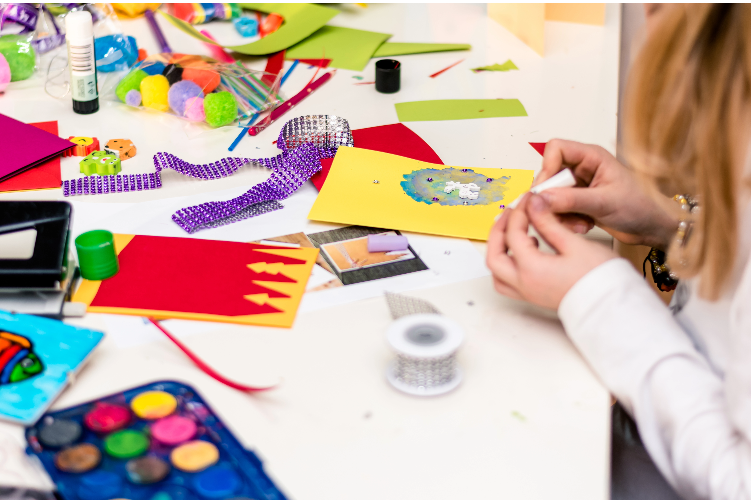
Repurposing holiday cards is a fun way to go back through the greetings your family received and extend the spirit of the season. Children can cut out pictures from the cards, or even cut off the half without writing. These pieces can be pasted onto a blank piece of paper or cardstock to create a collage or new card. The half-cards can also be used as post-cards with a brief note or thank you jotted on the undecorated site. 


This low-cost activity not only offers children a way to creatively express themselves, but it also can provide practice with several fine motor skills. If your child is not yet writing, they can dictate their message. Older children can learn how to make a homemade envelope and even practice writing the mailing and return address. 


If children are really enjoying this process, they can also send homemade greetings to the nonprofit Cards for Hospitalized Kids for distribution (just be sure to check the site for guidelines, especially regarding glitter!).


Sing Together or Compose a Song


Music is a powerful way to cultivate togetherness and belonging. When we sing (and dance!) together we build trust and empathy, while also alleviating stress. The holidays offer so many opportunities for creating music. If you aren’t keen on traditional carols or songs of the season, another fun option is to gather different music-making tools, like different-sized bells or even glasses with different amounts of water in them. Experiment with gently shaking the bells or tapping glasses with a pen or similar item to create a little melody. If everyone likes the tune, play around with adding some words to describe a funny part of the day, tell a story of the holiday, or share about a favorite food!


Cook & Bake Together


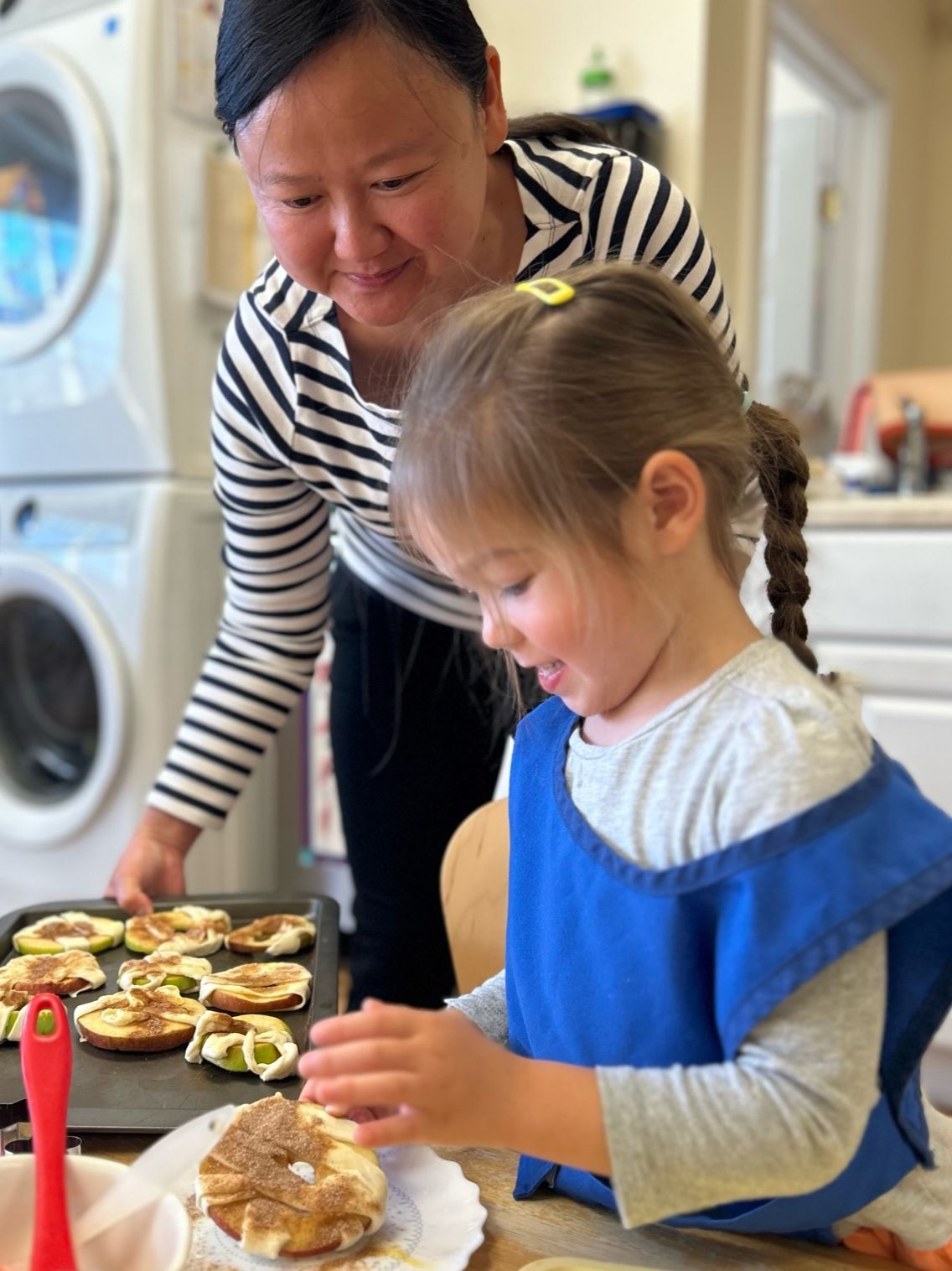
Time in the kitchen is always a wonderful way to create some holiday memories. With extra time during days off, you can really revel in the experience of gathering ingredients, measuring, mixing, decorating, and even getting sudsy during the clean-up.


Young children might enjoy dipping pretzels or peppermint sticks in melted chocolate and then (before the chocolate hardens) twirling them in sprinkles. Or you have a favorite cookie recipe for the holidays. Your children can help make a batch and then package the cookies with a fancy bow to deliver to neighbors or to those working over the holiday (like firefighters, police officers, hospital staff, etc.). 

Listen to or Share Stories Together


Storytelling captures our imaginations and transports us to other times and places. During the holiday season, we can create special moments when we come together and share stories, memories of past years or stories from our own childhoods. We can invite our children to share their stories, too! This kind of story time could be an opportunity to read treasured picture books aloud. Even older children will delight in the opportunity to revisit old favorites. 


We can also create a scene like that of the days when families would gather to listen to a radio drama. Make it cozy and special with pillows, soft blankets, and special snacks. Bring the Alexa (or another device) to the center and listen to an audio story. Sites like Story Nory or Light Up Your Brain offer short pieces (roughly 5 to 10 minutes long) if you want to warm up to the story-listening experience! 


Become a Tourist in Your Town


With all the holiday lights, it’s a wonderful time to have everyone get into pajamas, take a thermos or to-go cups of hot chocolate, and take a neighborhood driving tour with plenty of stops for sipping cocoa. For some added fun, you can rate favorite front-yard displays, create a scavenger hunt, or try to fill out homemade bingo cards. Playing some holiday music also helps set the mood.


Rituals are a significant part of our human experience and offer us ways to ground ourselves and form connections. As the holiday busyness subsides, let’s use these days together to connect with our children and create new family memories. Please also share your favorite rituals. We’d love to hear from you!


Subscribe to our Blog

You might also like
By Danielle Giordano March 16, 2026
In Montessori, we often focus on how the environment educates the child, but just as powerful as the physical space is the presence of the adult within it. For children in the first three years of life, adults are not simply caregivers or teachers. We are models of movement, language, emotional regulation, and relationships. Being present with young children is about being present in a different way. From Birth to About 14 to 16 Months Infants are forming their earliest understanding of the world and of themselves. They observe everything! So the adult’s role requires a quiet strength and a deep level of self-awareness. To be present with infants, we must love without expectation. Infants are not able to return affection in predictable ways, and presence cannot be dependent on feedback or validation. This work requires patience, generosity, and emotional steadiness. Movement also matters deeply at this stage. Infants study how adults walk, reach, sit, and handle objects. Slow, intentional movement gives children something meaningful to absorb. When adults rush, babies feel it, even if they cannot name it. Our language, too, must be precise and respectful. Clear enunciation and specific wording help infants build an accurate internal map of their world. Vague language like “that” or “over there” offers little clarity. Instead, we want to name what we see and what we are doing: “I am placing the cup on the table.” Infants cry as their primary form of communication. Being present means responding without panic or frustration, and making thoughtful decisions even when there are multiple demands on our presence. Emotional regulation in adults becomes a sense of emotional safety for the child. Dynamic Toddlers As children grow into toddlers, our presence still needs to be very intentional, yet it also becomes more dynamic. While toddlers are building independence, they still need deep connection. For adults, this means remaining loving without demanding affection or closeness. Even physical affection requires consent: “Would you like a hug?” or “Do you need some comfort?” Respecting children’s autonomy builds trust and self-awareness. This stage is full of transitions, especially for children navigating new siblings, new communities, or a growing awareness of others. Sometimes toddlers want to be capable and independent. Then sometimes they want to be cared for like a baby again. Presence means honoring both without pushing the child prematurely in either direction. Limits are a key expression of presence. Clear, consistent boundaries create structure, and structure supports independence. A few simple rules, maintained calmly and consistently, help children orient themselves in the world. If power struggles emerge, we can use them as opportunities to reflect on control rather than behavior. If children have tantrums, presence means staying close without escalating. During the height of anger or upset, we may simply ensure safety. When a child moves into sadness or overwhelm, we can offer comfort and reassurance. The goal is not to stop the tantrum, but to support a child through it. Flexibility is another essential part of presence. Although routines give children a sense of security, rigidity can disconnect us from their real needs. Sometimes the best choice is to go outside, to move, or to shift the plan. When children feel secure, they can adapt, and so can we. Finally, presence means embracing life alongside children. Young children notice the world with fresh eyes. Weather, seasons, light, and movement all become sources of joy and wonder. When we allow ourselves to feel awe again, children experience validation that life is something rich and meaningful. Our Inner Work Being present with young children is demanding, not because of what children require, but because of what we must bring: patience, humility, emotional regulation, and a willingness to slow down. This work invites us to become more aware of ourselves: our language, our pace, our reactions, and our assumptions. In doing so, we offer children not just care, but a living model of how to be human in relationship with others. Presence is not perfection. It is mindful attention. And for young children, that attention becomes the foundation upon which everything else is built. Please visit our school in Old Saybrook, CT to learn more about how we think about the role of adults in children’s learning environment! .
By Danielle Giordano March 9, 2026
When children begin working with pronouns in Montessori, they are not learning something entirely new. Instead, they are bringing to consciousness language they already use every day. Pronoun work builds slowly and intentionally. It is not about mastering grammar rules, but about understanding how language functions and how meaning is carried when words stand in for one another. Beginning With Experience, Not Explanation Montessori pronoun work begins with movement and spoken language, not written grammar. We start with little oral games to highlight how a pronoun functions, sometimes eliminating the pronoun (“Josie and John and Jack and Josiah are walking around the table.”) and other times emphasizing the pronoun (“They are walking around the table.”). The children love acting out the phrases, sometimes chanting, moving, watching one another, and laughing. Through these physical experiences, they begin to notice that we don’t always use names when we speak. Certain words take the place of a noun, and the meaning is still clear. At this stage, we don’t offer the term pronoun because we want children to simply experience its function. From Movement to Sentences Once children are ready for more structured language work, we introduce them to the Pronoun Grammar Box so they can build and rebuild sentences using color-coded cards for each part of speech. From one sentence to the next, only a few words change as nouns get replaced by pronouns. By comparing sentences, children discover that although the word changes, the sentence still makes sense. This comparison is essential. Rather than being told what a pronoun is, children see what it does. We then invite children to add grammar symbols to the sentence (noun, article, adjective, verb, preposition, adverb) until we finally draw attention to the remaining word: “This word is used in place of a noun.” Only then do we introduce the pronoun symbol: a purple isosceles triangle, the height of the noun symbol. Montessori Lore: The Pronoun’s Story There’s a beloved story about the pronoun symbol. Long ago, the pronoun was shorter and a different color. Wanting to be as important as the noun, it stretched itself taller and taller to reach the same height. As it stretched, its base became smaller and it turned purple from the effort of standing in the noun’s place. It’s a poetic reminder of what children discover through their work: a pronoun depends on the noun, borrowing its meaning while standing in for it. Why Pronouns Come Later Pronouns are more abstract than other parts of speech. To understand a pronoun, children must already have a strong, concrete understanding of the noun. For this reason, pronouns (along with interjections) are typically introduced later than other grammar symbols, often in the elementary years. Even then, one lesson is not enough. In Montessori, the real learning happens after the presentation, when we step back and children work independently with the material. The guide’s role is to show how to use the material, not to explain grammar in detail. Understanding emerges through repeated use. Deepening Understanding Through Play and Exploration As children grow more confident, the work expands to include: Transposition games, where pronouns are removed or replaced to explore how meaning changes. Command cards, which physically isolate pronouns through action. Personal pronoun charts, introducing first, second, and third person (singular and plural) through storytelling. The Verb Family, where children explore the close relationship between the verb, adverb, and pronoun. Children discover that pronouns often work closely with verbs, helping to carry action and meaning through a sentence. Subtleties Come Later At first, Montessori avoids getting caught in fine distinctions. Over time, children may explore nuances such as the difference between possessive pronouns (the book is mine) and possessive adjectives (my book). These discussions often happen later, sometimes with the support of grammar references, once children have a solid foundation. Language Revealed, Not Taught Through this carefully layered progression of movement, sentence work, symbols, and exploration, children develop a deep understanding of how words function differently in sentences. Montessori grammar invites children to discover how language works at their own pace through hands-on exploration. We don’t rush this process. So by the time children are ready to name the pronoun, it’s not a new idea. It’s something they already know. We invite you to visit our classrooms in Old Saybrook, CT to see firsthand the children’s joy of learning!
By Danielle Giordano March 1, 2026
March 1 marks Baby Sleep Day
More Posts