Biographies in Contemporary Children’s Literature
Tamara Sevigny • April 26, 2022

Biography books for children have come a long way from the dull accounts of people’s lives that many of us read when we were young. Today’s young readers are captivated by learning about other people, whether they be major historical figures or not. The art of the memoir has changed how we tell the story of a life, and that style of writing has slipped itself beyond just autobiographies and can be found in mainstream biographies as well.


It’s impossible to list all the amazing books we would like to in this brief article, but please consider them to be a tiny slice of what’s available. As always, we provide links for you to learn more about each title, and we have sorted the books into different categories making it easier to find something suitable for readers of all ages. Enjoy!


Picture Books (primary and lower elementary children)
Picture book biographies are incredible works of art. The illustrations are gorgeous, and the writing grabs the attention and wonder of young children and the adults who read to them. There are countless beautiful books out there; these are just a few titles that have been recently published.


In these books, children can learn about important human perspectives at a developmentally appropriate level. This includes the tragedy of the Holocaust, thriving with a disability, working hard to achieve one’s goals, preservation of native culture, dedication to social justice, and more.


●       Nicky & Vera: A Quiet Hero of the Holocaust and the Children He Rescued by Peter Sís

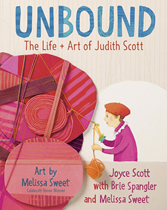
●       Unbound: The Life + Art of Judith Scott by Joyce Scott with Brie Spangler and Melissa Sweet, illustrated by Melissa Sweet

●       Niki Nakayama: A Chef’s Tale in 13 Bites by Jamie Michalak and Debbie Michiko Florence, illustrated by Yuko Jones

●       Child of the Flower-Song People: Luz Jiménez, Daughter of the Nahua by Gloria Amescua, illustrated by Duncan Tonatiuh

●       Song for Jimi: The Story of Guitar Legend Jimi Hendrix by Charles R. Smith Jr., illustrated by Edel Rodriguez

●       The Faith of Elijah Cummings: The North Star of Equal Justice by Carole Boston Weatherford, illustrated by Laura Freeman

●       Ashoka the Fierce: How an Angry Prince Became India’s Emperor of Peace by Carolyn Kanjuro, illustrated by Sonali Zohra


Children’s Biographies (elementary and middle school children)

The first two books in this section of our list are appropriate for lower elementary-aged children, while the rest are middle grade fiction best suited to upper elementary and middle school.


Just as with the picture books above, these cover a wide variety of important and interesting topics. They explore the lives of artists and their inspirations, living with a disability, how animals can make a profound impact on our lives, the complicated experience of living between two cultures, and life as a black child in the Jim Crow South.


●       The Story of Frida Kahlo: A Biography Book for New Readers by Susan B. Katz

●       Hokusai: He Saw the World in a Wave by Susie Hodge, illustrated by Kim Ekdahl

●       Normal: One Kid’s Extraordinary Journey (Young Reader’s Edition) by Magdalena and Nathaniel Newman

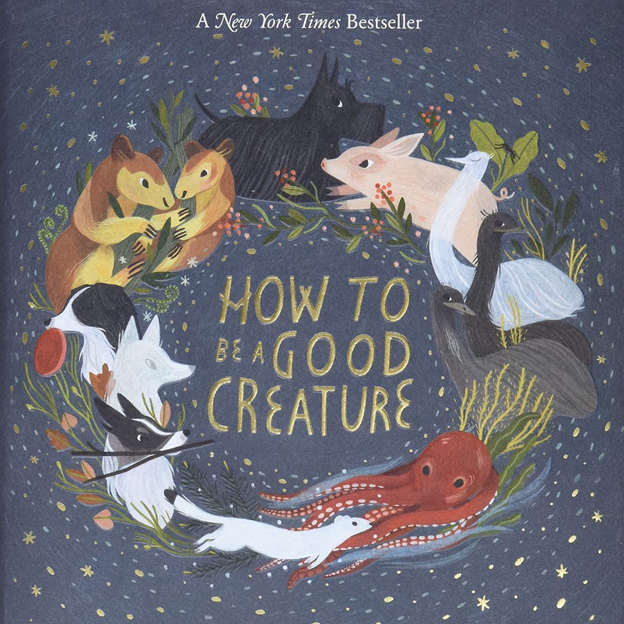
●       How to Be a Good Creature: A Memoir in Thirteen Animals by Sy Montgomery, illustrated by Rebecca Green

●       While I was Away by Waka T. Brown

●       Defiant: Growing Up in the Jim Crow South by Wade Hudson


Graphic Novels (these particular titles are suitable for elementary children)
As we have mentioned before, graphic novels are appealing to many children, but they open doors for some. Pictures help increase our understanding of context within a story, and graphic novels present literature in easier-to-consume “bites”. Accessibility is important, and getting kids to read, in whatever way works for them, is a great thing.


These three books happen to be about famous figures, but they have a nice way of presenting biographical information to children in an interesting and memorable way.


●       Albert Einstein and the Theory of Relativity by Jordi Bayarri

●       Wildheart: The Daring Adventures of John Muir by Julie Bertagna, illustrated by William Goldsmith

●       Seen: Rachel Carson by Birdie Willis, Rii Abrego, and Kieran Quigley


Young Adult Biographies (high school)
High school students are typically ready to consider heavier topics. They have a deep sense of justice and the motivation to make change. This makes it the perfect time to introduce them to how life is sometimes messy, complicated, and unfair.


Themes include growing up black in America, immigration and war, surviving sexual assault, and being falsely accused and imprisoned. One of the books - Passport - is a graphic novel that details the author’s life growing up with parents who work for the CIA.


●       Accused: My Story of Injustice by Adama Bah

●       Passport by Sophia Glock

●       Shout by Laurie Halse Anderson

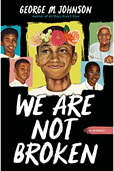
●       We Are Not Broken by George M. Johnson

●       Call Me American: The Extraordinary True Story of a Young Somali Immigrant (adapted for Young Adults) by Abdi Nor Iftin

Subscribe to our Blog

You might also like
By Danielle Giordano April 6, 2026
Have you ever watched a Montessori teacher give a lesson and thought, "That seemed...very short!”? If so, you may have witnessed a three-period lesson. What looks almost effortlessly simple is actually one of the most carefully designed teaching techniques. The three-period lesson is the primary way we introduce new vocabulary to young children. We use it constantly for phonetic sounds, geometric shapes, textures, quantities, names of parts of a flower, names of continents, and so much more. Virtually every time children learn a precise new word for something they're experiencing with their senses, we are using a version of this lesson. Why Vocabulary Needs Its Own Method Young children are in what Dr. Montessori called a sensitive period for language. This is a window of time when children’s minds are especially primed to absorb new words and refine their understanding of them. It’s important to keep in mind, though, that absorbing a word isn't the same as truly knowing it. Children might hear the word "rough" many times without ever firmly connecting that sound to what their fingers actually feel on a piece of sandpaper. The three-period lesson closes the understanding gap. It's built on an insight Dr. Maria Montessori borrowed from educator Édouard Séguin. Learning a word happens in stages: first association, then recognition, then recall. Moving through those stages deliberately, with no extra words or distractions to clutter the lesson, gives children's minds the clearest possible path to making a lasting connection. “Both object and name should strike the child's understanding at the same time — but only the name itself, and not some other word, should be pronounced.” — Dr. Maria Montessori, The Discovery of the Child The Simplicity of the Three Stages Here's how the three-period lesson unfolds. We’ll use a classic example of teaching the words "rough" and "smooth" with our sensorial textured boards. 1. ASSOCIATION — "This is..." The adult presents the object and names it clearly, with no extra words. The child repeats the word while experiencing the sensation. "This is rough." The child runs their fingers across the surface and repeats: "Rough." 2. RECOGNITION — "Show me..." After a brief pause, the adult asks the child to identify the object by name. The child simply points or touches, and thus no verbal answer is needed. "Which is smooth? Which is rough?" The child points to each in turn. 3. RECALL — "What is this?" The adult points to an object, and the child produces the name themselves, demonstrating that the word is now truly theirs. "What is this?" The child touches the surface and answers: "Rough." The whole lesson might take only two or three minutes, and this brevity is part of what makes it work. A child's attention is fully focused on precise vocabulary acquisition. What Happens When a Child Gets It Wrong One of the most quietly radical aspects of the three-period lesson is what happens when a child gets it wrong. If a child points to the wrong texture in the second stage, the adult doesn't correct. We don’t say, "no, try again.” Instead, we just end the activity gently, with the understanding that we will try the lesson again another day. Dr. Montessori was clear about this approach. A correction at that moment doesn't help a child learn the word. In fact, a correction only reinforces the feeling of having failed. So we simply close the lesson. The child carries no impression of having gotten something wrong, and when we revisit the lesson, the child comes to it fresh. As Dr. Montessori wrote, an error in the second period is simply a sign that the child "was not at that instant ready for the psychic association.” Nothing is wrong with the child. The teaching hasn’t failed. It just wasn’t the right moment. After the Lesson: When Words Come Alive One of the loveliest things to observe after a successful three-period lesson is what children do next. A child who has just learned the words "rough" and "smooth" will often wander the classroom touching things: the edge of a wooden shelf, a piece of fabric, the surface of a stone, and quietly naming the texture to themselves. The words become tools for understanding the world, and they want to use them everywhere. This spontaneous generalization is exactly what the lesson is designed to spark. The goal is never for children to recite vocabulary on command. Rather, we want to give them language that deepens and sharpens their experience of everything around them. Trying It at Home You don't need Montessori materials to use this approach. Any time you want to help a young child connect a precise word to something they're experiencing (the names of spices by smell, the names of fabrics by touch, the names of tools in the garden), the same three-step structure applies. Name it clearly. Ask them to show you. Ask them to tell you. Keep it brief, keep it joyful, and if they get stuck, simply set it aside and try again tomorrow. The lesson works because it respects how young minds learn. New connections need space, simplicity, and the freedom to form without pressure. To see this vocabulary tool in action, schedule a visit here in [Your Location]
By Danielle Giordano March 30, 2026
Rivers are so important to our human story. They are sources of nourishment, transportation, and connection. We see how children are naturally drawn to water, and rivers offer a powerful way to understand ecology, interdependence, and our place within the natural world. With this in mind, we want to share some of our favorite books about water, rivers, and watersheds. Through story and illustration, children can trace the journey of a single drop of water, observe how land and water shape one another, and begin to understand how human choices affect the health of our planet. We’ve grouped the following collection of river and water-focused books by developmental stage. Each title offers language, beauty, and meaningful context for deeper exploration. Whether you are reading with a toddler, a younger elementary child, or an emerging researcher, these books invite wonder, responsibility, and reverence for one of Earth’s most essential elements. For the Youngest Hey, Water! By Antoinette Portis This picture book takes us on a journey of how water is part of our lives in so many ways: from sprinkler spray to a teardrop trickling. The clean-lined illustrations transition between bird’s-eye views and close-up images. This is a great transition book for toddlers moving from pages with one word labeling a picture to a narrative that connects to daily experience. A Place for Rain By Michelle Schaub, Illustrated by Blanca Gómez A lovely introduction to the concept of rain gardens, this picture book follows a simple story of children witnessing how rain runoff can be transformed from being problematic into something stunning and special for everyone. The sweet, slightly geometric illustrations highlight how even simple actions can have a big impact. Water Is Water By Miranda Paul, Illustrated by Jason Chin Although a picture book about the changing states of water, the lyrical text and charming illustrations make this a delightful and fun-filled page-turner! It’s a great way to introduce young children to the water cycle and the importance of water in our lives. Water Cycle: For Younger Elementary Drop: An Adventure through the Water Cycle By Emily Kate Moon Bridging between comic style and traditional picture book, the story follows the character, Drop, as she travels through the water cycle. Delightful and engaging, this is a great book for younger elementary children and can serve as an easy-to-access resource for understanding the states of water. A Drop Around the World By Barbara Shaw McKinney, Illustrated by Michael S. Maydak Written in rhyming verse, this story follows Drop from a cloud near Maine around the world and back to Cape Cod Bay. A map inside the cover shows the journey, and emoji-style images accompany the text, linking to more detailed descriptions of the amazing science at each step along Drop’s path. Watersheds If the Rivers Run Free By Andrea Debunk, Illustrated by Nicole Wong This captivating picture book takes readers through the human story of rivers’ importance in our lives, the mistakes we’ve made, and how we can make things right and help rivers run free again. The rhythm of the text is accentuated by moments of human realization, with bold statements that step out of the rhyming pattern and gently jar us into a sense of action. The illustrations take readers on a journey, too! One Well: The Story of Water on Earth By Rochelle Strauss, Illustrated by Rosemary Woods Through its clear text and lush illustrations, One Well emphasizes the interconnectedness of water on our planet. It offers an array of interesting information that will appeal to children in elementary years, both through narrative text and short snippets overlaid on the images that fill each page. The fact that this picture book has an index is an indicator of how just how much its 32 pages contains! River Story By Meredith Hooper, Illustrated by Bee Willey Rich in realistic content yet engaging and accessible, this lushly illustrated picture book takes readers on a journey from the source of the river to where it empties into the sea. Watersheds: A Practical Handbook for Healthy Water By Gregor Gilpin Beck, Illustrations by Clive Dobson Best for older readers, this book offers helpful and non-technical information about watershed concepts and environmental concerns. This is an excellent resource for older elementary or younger adolescents engaged in ecology research. The illustrations are beautiful, too! We’d love to hear what you think about these books! You can also download a printable list for the next time you visit your local bookstore or library! Also, feel free to schedule a visit here in [Your Town/Location] to learn more about how the story of water flows through children’s lives!
By Danielle Giordano March 23, 2026
For many of us, we remember learning long division as a confusing sequence of steps to memorize and repeat (bring down, divide, multiply, subtract), often without a real sense of why it works. In Montessori classrooms, long division unfolds very differently. Through the Racks and Tubes material, children get to experience what division actually is. Two Ways to Divide: Sharing and Grouping Before introducing the material, we first clarify an important idea: there are two different kinds of division problems in real life. One asks, “If I share this equally, how much does each person get?” This is partitive division, or division by sharing. The other asks, “If I make groups of a certain size, how many groups can I make?” This is measurement division, or division by grouping. The Racks and Tubes material focuses on partitive division. Children physically share quantities equally and discover what one share receives. Materials like the Stamp Game emphasize division of measurement. Together, these approaches give children a complete understanding of division and help them choose the strategy that best fits a given problem. What Are Racks and Tubes? At first glance, the material is impressive and a little mysterious. Children are often drawn to the material, both for its beauty and its seeming complexity. Racks hold test tubes filled with beads, carefully color-coded by place value: units, tens, hundreds, thousands, all the way up to millions. Matching cups hold the dividend (the number being divided). Boards and skittles represent the divisor (the number doing the dividing). Every detail of the material reinforces place value. Each time children need to make an exchange, they trade in one bead of one category for ten of the next category (e.g. one hundred becomes ten 10’s). This process is visible and incredibly concrete. This material takes intentional focus. It takes time. And it makes the steps of long division clear. How Long Division Becomes Concrete When children solve a division problem with Racks and Tubes, they follow a logical, embodied process: They build the dividend using the racks and cups. They represent the divisor with individual figures on boards. They share beads one at a time, equally, to each part of the divisor. They stop when sharing is no longer possible and then see what remains from that category. They then bring down the next category of beads to continue the sharing process. Each step answers a real question: What does one unit get? What happens when we run out? What do we do with what’s left? Instead of being told “bring down the next digit,” children literally bring down the next category of beads. When exchanges are needed, they perform them physically by trading beads. Remainders are not mysterious leftovers. They are beads still sitting in the cup. Long division becomes a story children can follow. From Material to Abstraction One of the most beautiful aspects of this work is how naturally it leads into abstraction. At first, children record only the quotient. Later, they begin recording intermediate remainders. Eventually, they discover that multiplying the quotient by the divisor tells them how much has been used at each step. This is the very heart of the traditional algorithm. We don’t give abstract shortcuts. Instead we help children discover the pattern. This allows them to own the process. By the time children are working abstractly on paper, the algorithm already makes sense. It matches what their hands have done again and again. Why This Matters The Racks and Tubes material does more than teach division. It teaches: Deep place value understanding Logical sequencing Patience and precision Trust in one’s own reasoning Most importantly, it gives children confidence. Division is no longer something done to them. Instead, they can think through the process, step by step, with meaning and understanding. In Montessori, math is not about getting the answer quickly. It’s about building an understanding of why the process and answer makes sense. And with Racks and Tubes, long division finally does! Schedule a visit to our classrooms in Old Saybrook, CT to see for yourself!
More Posts